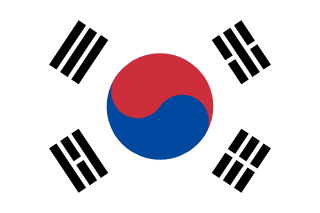
Welcome to South Korea
South Korea, officially the Republic of Korea, is located in East Asia on the southern part of the Korean Peninsula.
Its capital, Seoul, is a major centre of culture, education, technology and business.
Other cities include Busan, Incheon, Daegu, Daejeon, Gwangju and Ulsan.
The country also includes rural communities, mountains, coastal towns and Jeju Island.
South Korea is known for its ancient heritage, modern industries, music, film, literature and distinctive cuisine.
But to truly understand South Korea, we must look beyond its achievements.
We must discover the people: parents, children, teachers, farmers, workers, caregivers, seniors and veterans.
Each has individual hopes, challenges, memories and dreams.
"Behind every flag is a nation of human lives, each deserving dignity and peace."
🏡 A Day in the Life of South Korea
Imagine an ordinary morning somewhere in South Korea.
In Seoul, commuters board the subway and travel to work or school.
In Busan, a fisher prepares for another day at sea.
In Incheon, a worker begins a shift in transportation or manufacturing.
On Jeju Island, a farmer tends crops while tourists explore the coastline.
In a small village, an older person meets neighbours at a local market.
A teacher welcomes students. A nurse begins a hospital shift. A parent prepares a meal. A student studies for an examination.
Some households enjoy secure employment, comfortable homes and opportunities.
Others struggle with financial pressure, housing costs, illness, loneliness or insecure employment.
📜 Korea's Long History and Heritage
Korean history extends back thousands of years and includes ancient kingdoms, scholarship, philosophy and cultural achievements.
The Three Kingdoms period included Goguryeo, Baekje and Silla.
Later dynasties such as Goryeo and Joseon contributed to the development of Korean identity, government, arts and education.
The Korean Alphabet — Hangul
Hangul was introduced in the fifteenth century under King Sejong and the Joseon court.
It made written Korean more accessible to many people.
Today, the Korean language and writing system remain important symbols of cultural identity.
Japanese Colonial Rule
Japan annexed Korea in 1910 and ruled it until 1945.
During colonial rule, many Koreans experienced political repression, restrictions on cultural expression, forced labour and other abuses.
Korean independence activists resisted colonial rule in many different ways.
The experiences of this period remain important in historical memory and international relations.
"A nation's history belongs not only to those who ruled, but also to those whose lives were changed by power."
🕯️ The Korean War — 1950 to 1953
After Japan's defeat in the Second World War, the Korean Peninsula was divided into Soviet and American occupation zones near the 38th parallel.
Separate governments were established in North and South Korea in 1948.
On June 25, 1950, North Korean forces invaded South Korea.
The conflict grew into a major international war.
United Nations forces, led by the United States and including Canada, fought in support of South Korea.
China entered the war in support of North Korea.
The Human Cost
Millions of Koreans were killed, injured, displaced or separated from their families.
Cities and villages suffered extensive destruction.
Many children lost parents, and countless families lost their homes and livelihoods.
The 1953 Armistice
An armistice was signed on July 27, 1953, bringing major fighting to a halt.
However, the armistice was not a final peace treaty.
The Korean Peninsula remains divided, with the Demilitarized Zone separating North and South Korea.
"Every war is remembered through history books, but its deepest wounds are carried by families."
🇨🇦 Honouring Canadian Soldiers in Korea
South Korea holds a special place in Canadian military history.
More than 26,000 Canadians served during the Korean War, on land, at sea and in the air.
Tragically, 516 Canadians lost their lives in service.
Canadian soldiers fought in difficult terrain, during harsh winters and dangerous battles.
The Battle of Kapyong
In April 1951, members of the Princess Patricia's Canadian Light Infantry helped defend a key position during the Battle of Kapyong.
The battle became one of the best-known Canadian actions of the Korean War.
Canadian Remembrance
The United Nations Memorial Cemetery in Busan is the final resting place of hundreds of Canadian service members.
Their families and communities continue to remember their sacrifice.
The Korean War is sometimes called the Forgotten War.
But the lives lost, the families affected and the service performed should never be forgotten.
"The greatest tribute to those who served is to work for a world where children can live in peace."
🏛️ South Korea's Journey Toward Democracy
Following the Korean War, South Korea experienced rapid social, political and economic change.
During parts of its postwar history, military and authoritarian governments restricted political freedoms.
Students, workers, religious leaders and other citizens participated in movements demanding democratic reforms.
The Democratic Movement of 1987
Large public demonstrations in June 1987 called for greater democratic rights.
Constitutional reforms later that year established direct presidential elections and strengthened democratic institutions.
South Korea developed into a multiparty constitutional democracy.
Its political system includes a president, National Assembly, independent courts and constitutional protections.
Modern political debates include housing, the economy, labour rights, national security, education and social welfare.
Citizens hold many different political beliefs.
No government or political party represents every South Korean resident.
"Democracy is strengthened when every person has the freedom to be heard and their rights protected."
❤️ Family, Community and Belonging
Family relationships play an important role in many Korean communities.
Respect for elders, family responsibility and education have been influenced by longstanding Confucian traditions.
However, modern families come in many forms, including parents with children, single-parent households, couples and people living alone.
South Korea has experienced major changes in marriage, birth rates and family life.
Some families maintain close multigenerational ties.
Others experience separation, loneliness or difficulty balancing work and family.
Families Divided by War
A particularly painful part of Korean history is the separation of families between North and South Korea.
Some people have lived for decades without seeing relatives on the other side of the border.
For them, peace is not an abstract idea.
It may mean the hope of embracing a brother, sister, parent or child.
"Behind political borders are families who simply wish to be together."
🎵 South Korean Culture and Traditions
🎶 Korean Music
Traditional music, folk songs, contemporary pop and K-pop reflect the country's diverse musical heritage and creativity.
🍚 Korean Food
Korean cuisine includes kimchi, bibimbap, bulgogi, tteokbokki, rice, noodles, soups and many regional dishes.
👘 Hanbok
Hanbok is traditional Korean clothing, often worn during special celebrations and cultural occasions.
🎬 Film and Television
Korean cinema and television dramas have reached audiences across the world, exploring many human experiences.
🎉 Celebrations
Seollal, the Lunar New Year, and Chuseok, a major harvest holiday, are important family occasions.
🥋 Sports
Taekwondo, baseball, football, archery, skating and other sports connect people across generations.
🎓 Children, Education and Expectations
South Korea places significant importance on education.
Many students work hard to prepare for examinations and future careers.
The country has developed strong educational institutions and notable achievements in science and technology.
However, academic expectations, competition and long study hours can create stress for some young people.
Not every child has the same family resources or opportunities.
Some students experience bullying, social isolation or mental health difficulties.
Children need more than academic success.
They also need friendship, safety, creativity, confidence and a sense of belonging.
"A child's worth should never be measured only by examination results or achievements."
🕊️ Faith, Spirituality and Beliefs
South Korea includes Buddhist, Protestant, Catholic and other religious communities.
Many South Koreans identify as non-religious.
Confucian traditions have also influenced family life, education and social customs.
Traditional Korean spiritual practices remain part of the country's cultural heritage.
People seek meaning through faith, family, personal values, nature and service to others.
Freedom of religion and conscience is important to democratic society.
"Our beliefs may differ, but compassion and human dignity are needs we all share."
🌿 Mountains, Coastlines and the Environment
South Korea's landscapes include mountains, forests, rivers, beaches and islands.
National parks such as Seoraksan and Jirisan offer natural beauty and outdoor recreation.
Jeju Island is known for volcanic landscapes, coastlines and distinctive cultural traditions.
Many people enjoy hiking, cycling, visiting parks and spending time in nature.
Environmental challenges include air pollution, climate change, flooding, extreme heat and habitat protection.
Environmental responsibility means protecting people's health and the natural world for future generations.
"One World. One Future. One responsibility to protect the home we share."
🌧️ Challenges Facing South Korea
South Korea has experienced remarkable economic, technological and cultural development.
Yet many residents still face serious challenges.
Older Adults and Poverty
Poverty among older adults remains a significant social concern, particularly for some people living alone.
Mental Health
Stress, anxiety, depression and suicide are serious public health concerns. Accessible support and reducing stigma are important.
Housing
High housing costs and challenges obtaining secure accommodation affect some young adults and families.
Work and Family
Long working hours, career insecurity and difficulties balancing family responsibilities can create pressure.
Low Birth Rate
Very low fertility and population ageing raise questions about housing, employment, caregiving and family support.
Loneliness
Social isolation can affect young people, seniors and individuals living alone, even in busy cities.
🕊️ The Hope for Peace on the Korean Peninsula
The Korean Peninsula has remained divided since the middle of the twentieth century.
South Korea is a democratic republic, while North Korea is governed under a one-party authoritarian system.
Governments on both sides have pursued different policies toward security, dialogue and reunification over time.
The security situation remains sensitive, with a heavily guarded border and the continuing consequences of the 1950-1953 war.
But beyond governments, military strategies and political disagreements are ordinary human beings.
Parents want safety for their children.
Families hope to live without fear of war.
Separated relatives wish to see one another again.
Young people hope for meaningful futures.
Supporting peaceful dialogue, human rights and protection of civilians is essential to the well-being of people across the peninsula.
"Peace is more than the absence of fighting. It is the opportunity for human beings to live without fear."
🤝 South Koreans Helping One Another
Throughout South Korea, charities, volunteers and community groups support people experiencing hardship.
Some assist older adults, families with low incomes, people experiencing homelessness and individuals facing mental health difficulties.
Others support children, people with disabilities, migrants and refugees.
Volunteers and emergency responders also serve communities during floods, fires and other disasters.
These acts demonstrate that compassion is not limited to great public achievements.
It can be expressed through ordinary choices every single day.
"Sometimes the greatest gift we can offer another person is to remind them they are not alone."
🌅 South Korea's Dreams for Tomorrow
Imagine a South Korea where every child feels safe, valued and encouraged.
Where students are recognized for their humanity, not only their achievements.
Where young adults can find meaningful work and secure housing.
Where seniors have financial security, companionship and care.
Where mental health support is accessible without shame or stigma.
Where people experiencing homelessness receive housing and meaningful assistance.
Where veterans and their families receive recognition and support.
Where families divided by the Korean War have renewed hope.
Where political differences are resolved through dialogue rather than violence.
And where every person can imagine a future shaped by dignity, compassion and peace.
"A nation's greatest achievement is a future where every generation has reason to hope."
🌎 Your Journey of Understanding
You have explored South Korea's history, culture, daily life, achievements and challenges.
Now consider three questions connecting your mind, heart and spirit.
Click each question to reveal its reflection.
🧠 MENTALLY - What have you learned?
Before this journey, what came to mind when you thought of South Korea?
Technology? K-pop? Seoul? Korean food?
Did you also think about the Korean War, Canada's sacrifices, democratization, elderly poverty and separated families?
What have you learned about the difference between national success and individual well-being?
Why is it important to understand people beyond the headlines and images associated with their country?
❤️ EMOTIONALLY - What touched your heart?
Imagine an older Korean person who has not seen a brother or sister across the border for decades.
A Canadian family remembering a soldier who never returned from the Korean War.
A teenager struggling under intense academic expectations.
A senior living alone with very little financial security.
A parent worried about the possibility of renewed conflict.
How would hearing their individual stories change your understanding?
What could compassion look like in action?
🕊️ SPIRITUALLY — What connects us?
The Korean War separated families, destroyed communities and caused terrible suffering.
What does this teach us about the importance of peace?
Can we honour soldiers who served without glorifying war?
How do forgiveness, remembrance, accountability and reconciliation work together?
What does inner peace mean when the world around us feels uncertain?
Can one person's compassion inspire greater understanding between strangers?
What small act of kindness could you offer today to help someone feel that they matter?
The South Korea Behind the Flag
Somewhere in South Korea, a mother prepares breakfast for her children.
A teacher encourages a student to follow a dream.
A fisher returns to a harbour near Busan.
A musician shares a melody with the world.
A nurse comforts a patient.
A grandparent remembers a family divided by war.
A volunteer helps someone who feels forgotten.
A veteran remembers a fallen friend.
And somewhere, a young person dreams of a future without war, fear or separation.
"Ancient traditions.
Remarkable innovation.
A history of sacrifice.
Countless human stories.
One shared humanity."
That is the South Korea behind the flag.
Return to Beginning Explore Another NationSources and Further Reading
Explore further information about South Korea's history, democracy, military remembrance, health and society.
Veterans Affairs Canada — Korean War
Global Affairs Canada — Canada and South Korea
Republic of Korea — Constitution and Democracy
OECD — Health at a Glance: Korea
Korea Tourism Organization — Culture and Heritage
This page provides a broad introduction and does not represent every person's experiences, beliefs or political views.