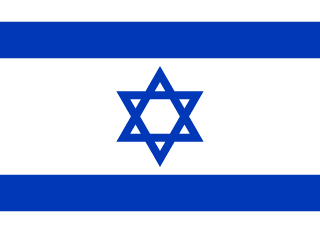
Welcome to Israel
Israel is a country in the eastern Mediterranean, with a history deeply connected to Jewish, Christian and Muslim religious and cultural traditions.
Modern Israel was established in 1948, in a region whose history extends back thousands of years.
The same period brought war and the displacement of hundreds of thousands of Palestinians, remembered by Palestinians as the Nakba.
The histories, memories and identities connected to this land remain deeply important to Israelis and Palestinians.
Today, Israel is home to people from many backgrounds, including Jewish, Arab, Druze and other communities.
It is known for scientific research, medical innovation, technology, agriculture, music and cultural achievement.
Yet behind its achievements and political controversies are ordinary human lives.
Parents raising children. Teachers sharing knowledge. Doctors caring for patients. Workers supporting families. Seniors remembering the past.
"To understand a country, we must look beyond its government and discover the humanity of its people."
🏡 A Day in the Life of Israel
Imagine an ordinary morning somewhere in Israel.
In Tel Aviv, commuters travel to offices, schools and workplaces.
In Jerusalem, families prepare for the day amid neighbourhoods shaped by different religious and cultural traditions.
In Haifa, students attend university and workers begin their daily routines.
In an Arab town, a shopkeeper prepares to welcome customers.
In a kibbutz, a community may continue traditions of cooperation while participating in modern economic life.
Some families enjoy financial security and comfortable homes.
Others struggle with housing expenses, employment, discrimination or uncertainty about the future.
War and security threats have also disrupted ordinary routines for many families.
🌍 The Many Peoples of Israel
Israel's population includes communities with different histories, religions, languages and cultural identities.
Jewish Communities
Jewish Israelis have family origins in the Middle East, North Africa, Europe, Ethiopia and many other regions. Religious and secular traditions vary widely.
Arab Citizens
Arab citizens of Israel include Muslim, Christian and Druze communities. Many identify as Palestinian citizens of Israel. Their experiences and perspectives are diverse.
Druze Communities
Druze communities maintain distinctive religious and cultural traditions, histories and identities.
Other Communities
Israel is also home to migrant workers, international residents, people of different religious backgrounds and communities with varied family histories.
Hebrew is the state's official language, while Arabic has special legal status and is widely spoken.
English, Russian, Amharic and other languages are also heard in daily life.
Every community contains individuals with different beliefs, priorities and aspirations.
❤️ Family and Community
Family relationships and community connections play important roles in many Israeli lives.
Some households are religiously observant, while others are secular.
Some families have several generations living nearby. Others maintain connections across countries and continents.
Communities gather through schools, neighbourhood activities, religious institutions, sports clubs and volunteer organizations.
People celebrate birthdays, weddings, religious holidays and important milestones.
As in other nations, some families experience poverty, loneliness, illness or grief.
Others carry emotional wounds related to violence, military service, displacement or loss.
"Regardless of nationality or religion, every family deserves safety, love and belonging."
🎵 Culture, Food and Traditions
Israeli cultural life reflects influences from many regions and communities.
🍽️ Food
People enjoy falafel, hummus, shakshuka, breads, salads and many regional dishes. Much of this cuisine has traditions shared throughout the Middle East and Mediterranean.
🎶 Music
Music includes Jewish, Arabic, Mediterranean, classical, folk, religious and contemporary styles.
🎨 Arts
Literature, theatre, cinema, dance, visual arts and other creative traditions reflect different identities and experiences.
🎉 Celebrations
Rosh Hashanah, Passover, Hanukkah, Ramadan, Eid, Christmas and other observances are meaningful to different communities.
⚽ Sports
Football, basketball, swimming, martial arts and other sports bring people together through participation and competition.
🔬 Innovation
Israeli researchers and businesses contribute to medicine, agriculture, computing, water technology and scientific discovery.
🕊️ A Land of Deep Religious Significance
The land holds great religious significance for Jews, Christians and Muslims.
Jerusalem contains sites sacred to all three traditions.
For Jewish communities, Jerusalem is central to religious history and identity.
For Christians, the city is deeply connected to the life, death and resurrection of Jesus.
For Muslims, Al-Aqsa Mosque and the wider Haram al-Sharif compound are places of profound religious importance.
Religious connections to these places can inspire devotion, identity and belonging.
They are also intertwined with political disputes and competing claims.
Many people hope for arrangements that protect sacred places and respect freedom of worship.
"Faith can inspire us to recognize the dignity of others, even when our beliefs differ."
🎓 Children and Education
Children across Israel attend schools, build friendships and develop hopes for the future.
Different educational systems serve Hebrew-speaking, Arabic-speaking, religious and other communities.
Educational experiences and resources vary between regions and population groups.
Some students enjoy extensive opportunities in science, sports, arts and technology.
Others face barriers related to economic inequality or social disadvantage.
Security threats, violence and conflict can also affect children's emotional well-being and education.
Every child deserves to learn without fear and to develop in a safe, caring environment.
🛠️ Work and Everyday Needs
Israel has a diverse economy that includes technology, healthcare, education, manufacturing, agriculture, tourism and public services.
Some households enjoy high incomes and financial security.
Others face rising living expenses, housing difficulties, employment barriers and poverty.
Economic opportunities are not distributed equally among all communities.
War and regional instability can disrupt workplaces, tourism, businesses and family finances.
Like people everywhere, many residents hope for secure employment, affordable housing and a better future for their children.
🌧️ Challenges Facing People in Israel
Alongside cultural and economic achievements, people face serious social and personal challenges.
Security and Trauma
Attacks, war, displacement and loss can leave lasting emotional effects on families and communities.
Economic Inequality
Income differences and housing costs affect access to opportunity and financial stability.
Mental Health
Anxiety, depression, grief and trauma can affect children, adults, veterans and survivors of violence.
Discrimination
Arab citizens and other minority communities have experienced documented inequalities in public services, opportunities and treatment.
Political Divisions
People disagree about government, security, religion, judicial independence and relations with Palestinians.
Social Isolation
Older adults, people with disabilities and those separated from their families may face loneliness or difficulty accessing support.
🏛️ Government, Democracy and Human Rights
Israel is a parliamentary democracy with a multiparty political system and an elected legislature known as the Knesset.
Its political system includes a prime minister, courts and various public institutions.
Citizens hold diverse political opinions and frequently engage in public debate and demonstrations.
Issues involving judicial independence, minority rights, religion and state, security and the Israeli-Palestinian conflict have generated significant disagreement.
Human-rights organizations have documented inequalities affecting Arab citizens and concerns involving government institutions.
The situation in the occupied Palestinian territories also raises distinct and serious international legal and human-rights issues.
International law requires the protection of civilians and respect for fundamental human rights.
A government's actions must be open to scrutiny and accountability.
At the same time, no individual should be assumed to support every decision of their government.
🕊️ Israel, Palestine and the Human Cost of Conflict
The Israeli-Palestinian conflict has a long and painful history.
Both Israelis and Palestinians have deep historical, cultural and personal connections to the land.
The conflict involves questions of security, national identity, self-determination, displacement, territory and human rights.
October 7, 2023
On October 7, 2023, Hamas and other Palestinian armed groups carried out attacks in Israel, killing approximately 1,200 people and taking 251 hostages.
Civilians were among those deliberately targeted, and the attacks caused profound suffering among Israeli families.
The War in Gaza
Israel's subsequent military operations in Gaza caused extensive Palestinian civilian deaths, injuries, displacement and destruction.
Families lost homes, schools, loved ones and access to essential services.
United Nations humanitarian reporting in October 2026 continued to document civilian casualties, displacement, shelter shortages and severe needs in Gaza.
The West Bank
Palestinians in the occupied West Bank, including East Jerusalem, have faced restrictions on movement, settler violence, demolitions and displacement.
The United Nations has documented continuing attacks and serious humanitarian concerns.
The Importance of Accountability
International humanitarian law prohibits deliberately targeting civilians and taking hostages.
All parties must comply with the laws of armed conflict, including rules protecting civilians.
The suffering of one population does not justify attacks on another population.
Israeli families deserve safety. Palestinian families deserve safety.
The rights of either people cannot be secured through the denial of the other's humanity.
"No child's life is worth less because of the flag or community into which they were born."
🎖️ Remembering Soldiers, Veterans and Civilians
Military service plays a significant role in Israeli society.
Many Jewish Israeli citizens and some other groups are subject to military service requirements, with exemptions and different arrangements applying to others.
Service can involve separation from family, danger and emotional or physical injury.
Some veterans experience long-lasting trauma, grief or difficulty adjusting to civilian life.
We can acknowledge the human cost of military service while also recognizing the responsibility of armed forces to respect international humanitarian law.
Civilians affected by war, including Israeli and Palestinian families, deserve remembrance and care.
Honouring soldiers does not require glorifying war.
It can mean remembering sacrifice, supporting those who suffer and working to prevent future generations from experiencing the same tragedies.
"May we honour those who have suffered by working for a future where fewer people must endure the pain of war."
🌅 Dreams for Tomorrow
Imagine a future where Israeli children can attend school without fear of attacks.
Where Palestinian children can grow up with security, freedom and opportunity.
Where families no longer have to grieve loved ones lost to violence.
Where veterans and survivors receive effective physical and mental healthcare.
Where Jewish, Muslim, Christian, Druze and other communities can live with dignity and mutual respect.
Where political differences are addressed through peaceful dialogue rather than violence.
Where the rights of Israelis and Palestinians are respected under international law.
There are different political visions for achieving a lasting peace.
But any sustainable future must address security, human rights, justice and the legitimate aspirations of both peoples.
"Peace is not simply the absence of war. It is the presence of dignity, justice, security and hope."
🌎 Your Journey of Understanding
You have explored different aspects of Israeli life, history, culture and conflict.
Now consider three questions about our shared humanity.
Click each question to reveal its reflection.
🧠 MENTALLY — What have you learned?
When you hear the word Israel, what first comes to your mind?
Its government? Its history? Its religious significance? The conflict with Palestinians?
Did you also think about its ordinary families, children, workers and seniors?
Can we examine government decisions critically without assuming that every citizen shares the same beliefs?
And can we recognize the rights and experiences of both Israelis and Palestinians without overlooking the documented harms experienced by either?
❤️ EMOTIONALLY — What touched your heart?
Imagine an Israeli parent grieving a child killed in an attack.
Imagine a Palestinian parent grieving a child killed during war.
Imagine children whose early memories include fear, displacement and the sound of explosions.
How would listening to the stories of these families change your feelings?
Can compassion extend to both populations while still recognizing the responsibility of those who commit abuses?
🕊️ SPIRITUALLY — What connects us?
Judaism, Christianity and Islam have different histories and beliefs, but each contains teachings concerned with moral responsibility and human relationships.
People with no religious beliefs can share commitments to dignity, justice and compassion.
What would it mean to see every child as deserving of the same protection and care?
How can we seek peace without ignoring truth, accountability or the rights of victims?
What small act of understanding could you bring into your own community today?
The Humanity Behind the Flag
Somewhere in Israel, a mother is preparing breakfast for her child.
A teacher is helping a student discover a new idea.
A healthcare worker is caring for someone in pain.
A grandparent is sharing memories with a younger generation.
A family is remembering a loved one lost to violence.
And somewhere, an ordinary person is dreaming of a peaceful future.
Across the border, Palestinian families hold many of these same hopes.
"Different histories.
Different beliefs.
Different experiences.
One shared humanity."
That is the humanity behind the flag.
Return to Beginning Explore Another NationSources and Further Reading
For factual information about Israeli society, human rights and the Israeli-Palestinian conflict, visit:
Israel Central Bureau of Statistics
United Nations — Humanitarian Situation in the Occupied Palestinian Territory
United Nations Human Rights Office
This page provides a broad introduction and does not claim to represent every person's experience or political viewpoint.