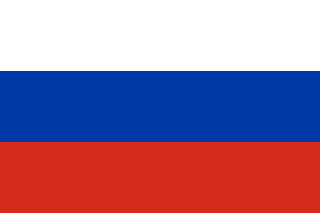
Welcome to Russia
Russia stretches across Eastern Europe and northern Asia, covering an enormous range of landscapes, climates, communities and cultures.
From the busy streets of Moscow and Saint Petersburg to Siberian towns, rural villages and communities of the Far East, daily life takes many forms.
Russia has contributed significantly to literature, classical music, science, engineering, mathematics and the performing arts.
It is also a country shaped by difficult chapters of history, political change, war and deep social challenges.
Yet behind the international headlines are ordinary people.
Parents raising their children. Teachers preparing lessons. Doctors caring for patients. Workers supporting families. Seniors sharing their memories.
Understanding Russia means recognizing both the nation's achievements and its problems, without reducing every citizen to the actions of the state.
"To understand a nation, we must first recognize the humanity of its people."
🏡 A Day in the Life of Russia
Imagine an ordinary morning somewhere in Russia.
In Moscow, a commuter boards the metro on the way to work. In Saint Petersburg, a student prepares for university.
In Siberia, a family prepares for a cold winter day. In a rural community, a farmer begins work early.
A grandmother prepares tea and breakfast. A nurse begins a hospital shift. A child gets ready for school.
Some families enjoy financial security and comfortable homes. Others struggle with rising expenses, limited opportunities or access to services.
Life varies considerably between major cities, industrial centres, remote settlements and rural communities.
🌍 A Country of Many Peoples
Russia is home to many ethnic, linguistic and cultural communities.
Although ethnic Russians form the largest population group, other peoples include Tatars, Bashkirs, Chechens, Chuvash, Sakha, Buryats and numerous additional communities.
Many Indigenous peoples live across Siberia, the Arctic and the Russian Far East.
Russian is the country's official state language, while republics and communities also maintain other languages and linguistic traditions.
Different groups have distinct histories, customs, foods, music and relationships with the land.
Respecting these differences is essential to understanding the country's cultural identity.
❤️ Family, Friendship and Community
Family and close friendships are meaningful parts of life for many Russians.
Parents, grandparents, children and extended relatives may support one another through difficult times.
Some families live together across generations. Others live separately but maintain strong connections.
People gather for birthdays, holidays, meals and community celebrations.
Friendships may develop through schools, workplaces, neighbourhoods, sports and shared interests.
Families can also experience separation through migration, military service, economic circumstances and war.
"Behind every nationality is a human being who needs love and belonging."
🎵 Russian Culture and Traditions
Russia has a rich cultural heritage that spans many centuries and communities.
🎶 Music
Russian classical composers, folk traditions, ballet, opera and contemporary music have contributed to international culture.
📚 Literature
Writers such as Tolstoy, Dostoevsky, Chekhov and Pushkin are widely studied. Russian literature explores human relationships, morality, suffering and the search for meaning.
🍽️ Food
Traditional foods include borscht, pelmeni, blini, pirozhki, soups and regional dishes reflecting the country's many cultures. Many foods are shared with neighbouring countries.
🎭 Arts
Ballet, theatre, painting, crafts, architecture and cinema have strong traditions. Artists from many regions contribute to cultural life.
🎉 Celebrations
New Year is widely celebrated. Other occasions include Orthodox Christmas, Maslenitsa, Victory Day and numerous regional and religious festivals.
🏒 Sports
Ice hockey, football, figure skating, gymnastics, chess and winter sports have long attracted interest and participation.
🎓 Children and Education
Children throughout Russia attend school, develop friendships and imagine their futures.
Russian education has traditions in mathematics, science, engineering, music and the arts.
Educational opportunities can differ between wealthy urban areas and remote or disadvantaged communities.
Some children have access to extensive facilities, clubs and educational programs. Others face barriers related to resources or geography.
War and economic uncertainty can also influence children's sense of safety and stability.
Every child deserves education, encouragement, security and the opportunity to develop their abilities.
🕊️ Faith, Spirituality and Beliefs
Russian Orthodox Christianity has played a major role in Russian history and culture.
Russia is also home to Muslim, Buddhist, Jewish, other Christian, Indigenous spiritual and non-religious communities.
Beliefs and practices vary widely by individual and region.
Religious identity can influence family traditions, celebrations and community life.
Everyone deserves respect for their dignity, including those whose beliefs differ from ours.
"Different beliefs need not prevent shared compassion."
🛠️ Work, Housing and Everyday Needs
People in Russia work in manufacturing, energy, agriculture, healthcare, education, transportation, science, technology and many other fields.
Large metropolitan regions offer different employment opportunities from small towns and remote rural communities.
Households may experience financial pressures related to income, housing, food, transportation and other essential expenses.
Access to healthcare, infrastructure and specialized services can vary significantly between regions.
The desire to build a secure life for one's family is familiar to people everywhere.
🌧️ Challenges Facing the Russian People
Despite its considerable resources and cultural achievements, Russia faces significant social, economic and political challenges.
Economic Inequality
Household income and opportunities differ across regions and social groups.
Mental Health
Grief, depression, anxiety, loneliness and trauma can affect individuals and families.
Alcohol and Addiction
Alcohol-related harm and other substance-use problems affect some families and communities. Prevention and accessible treatment matter.
Rural Isolation
Remote communities can face barriers involving transport, healthcare, education and employment.
Discrimination
Ethnic minorities, migrants and other groups can experience discrimination and unequal treatment.
War and Family Separation
Military deployments, deaths, injuries, displacement and political uncertainty can have lasting effects on individuals and families.
🗣️ Government, Freedom and Human Rights
Russia is formally a federal republic with a constitution, president, parliament and regional governments.
However, independent human-rights organizations have documented major restrictions on political opposition, independent journalism and peaceful public expression.
Authorities have used laws concerning extremism, foreign agents and criticism of the military to restrict dissent and civil society.
These restrictions can make it difficult for people to express political opinions openly or obtain independent information.
It is important to remember that the views of ordinary Russians are not all identical.
Some support government policies, some oppose them, and others hold different or uncertain views. Publicly expressed opinions do not necessarily represent everyone.
Respect for human rights, personal dignity, freedom of thought and peaceful expression matters for every society.
🕊️ Russia, Ukraine and the Human Cost of War
In February 2022, the Russian Federation launched its full-scale invasion of Ukraine, following the conflict and occupation of Ukrainian territory that began in 2014.
The invasion has caused enormous suffering, including civilian deaths and injuries, displacement, destruction and lasting trauma.
The United Nations has documented extensive harm to Ukraine's civilian population, homes and infrastructure.
Military personnel and families in both countries have also experienced deaths, injuries, separation and grief.
The suffering of Russian families does not lessen Russia's responsibility for its invasion, nor does it diminish the rights and suffering of Ukrainians.
At the same time, an ordinary person's nationality alone does not determine their beliefs or personal responsibility.
Some Russians have spoken against the war despite the risk of punishment. Others support it, while public opinion and private beliefs are difficult to measure reliably under restrictions.
Peace requires more than the absence of fighting. It requires the protection of human rights, respect for sovereignty, security, justice and accountability.
"The lives of children are precious on every side of a border."
🎖️ Remembering Soldiers, Veterans and Civilians
Russia's military history includes service and enormous sacrifices during the Second World War, which is widely remembered in Russia as the Great Patriotic War.
Millions of Soviet soldiers and civilians died during that conflict. Their suffering remains part of family and national memory.
Military service in later conflicts has also affected generations of soldiers and families.
Some veterans experience physical injuries, psychological trauma and challenges adjusting to civilian life.
Remembering military sacrifice does not require endorsing every military action or political decision.
We can respect human life, acknowledge grief, support veterans and their families, and recognize the rights of civilians harmed by war.
True remembrance can encourage future generations to seek peaceful solutions instead of repeating the tragedies of the past.
"May remembering the cost of war strengthen our determination to protect peace."
🌅 Dreams for Tomorrow
Imagine a Russia where children grow up without fear of war.
Where families can remain together, and veterans receive appropriate physical and mental healthcare.
Where all communities can preserve their languages and cultures.
Where older adults are treated with dignity and vulnerable people receive meaningful support.
Where individuals can speak openly, learn from different perspectives and participate peacefully in public life.
Where international disagreements are resolved through diplomacy, respect for international law and protection of human rights.
These are aspirations for a more secure, compassionate and peaceful future.
"A future of peace begins by recognizing that every human life has value."
🌎 Your Journey of Understanding
You have explored some of the different experiences of people living in Russia.
Now consider three questions about humanity. Select each question to reveal its reflection.
🧠 MENTALLY - What have you learned?
When you hear the word Russia, what comes to mind first?
Its government and international actions? Its history, literature and culture? Or the ordinary families who live there?
Can we hold a government accountable for its actions without assuming all of its citizens share the same beliefs?
How does understanding a country's cultural diversity affect your perspective?
❤️ EMOTIONALLY - What touched your heart?
Imagine a Ukrainian family whose home has been destroyed by war.
Imagine a Russian family grieving the death of a loved one.
Imagine children growing up surrounded by uncertainty, fear and separation.
How can we show compassion to individuals while still recognizing the importance of responsibility, justice and truth?
🕊️ SPIRITUALLY - What connects us?
Can compassion cross borders even when governments are in conflict?
What does it mean to value every human life?
How can we support peace without ignoring the suffering of victims or the need for accountability?
What could each of us do to replace hatred and prejudice with understanding, respect and kindness?
The Russia Behind the Flag
Somewhere in Russia, a mother is reading to her child.
A teacher is helping a student discover a new idea.
A musician is playing a familiar melody.
A grandparent is sharing memories of earlier generations.
A family is hoping for the safe return of a loved one.
And somewhere, someone is quietly dreaming of a world without war.
"Different histories.
Different beliefs.
Different lives.
One shared humanity."
That is the Russia behind the flag.
Return to Beginning Explore Another NationSources and Further Reading
For additional information about human rights and the humanitarian effects of the war, visit:
Human Rights Watch: Russia, World Report 2026
This page offers a broad introduction, not a claim to represent the views or experiences of every Russian citizen.