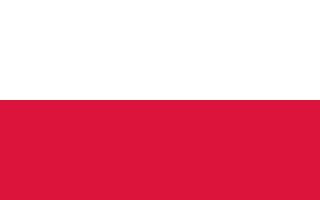
Welcome to Poland
Poland is a Central European country with a rich history, beautiful cities, forests, mountains, lakes and coastal communities.
From the historic streets of Kraków and Warsaw to the Tatra Mountains and Baltic Sea, Poland offers a wide variety of landscapes and ways of life.
Poland is known for its music, literature, scientific achievements, cultural traditions and history of resilience.
Yet the country is far more than its historical monuments and international reputation.
It is the story of ordinary people.
Parents raising children. Teachers sharing knowledge. Workers supporting families. Seniors remembering earlier generations.
And communities working to create a better future.
"To understand Poland, we must discover the humanity behind the flag."
🏡 A Day in the Life of Poland
Imagine an ordinary morning somewhere in Poland.
In Warsaw, commuters travel by tram, bus or train to work and school.
In Kraków, a shopkeeper prepares to welcome customers.
In Gdańsk, workers begin another day near the Baltic coast.
In a rural village, a farmer tends crops and cares for animals.
A mother prepares breakfast. A child gets ready for school. A nurse begins a hospital shift.
A grandparent enjoys a morning cup of tea and remembers family traditions.
Some families enjoy stable employment, comfortable homes and financial security.
Others experience housing difficulties, rising expenses, health challenges or uncertain employment.
📜 Poland's History and Identity
Poland has a history stretching back more than a thousand years.
The Polish state emerged in the tenth century, and the country developed important political, religious and cultural traditions.
The Polish-Lithuanian Commonwealth became a major European state.
During the late eighteenth century, Poland was partitioned by neighbouring powers and disappeared as an independent state for more than a century.
Poland regained independence in 1918 following the First World War.
Its independence was again threatened when Nazi Germany invaded on September 1, 1939.
The Soviet Union invaded eastern Poland on September 17, 1939.
These invasions brought enormous suffering to the population.
Following the Second World War, Poland came under communist rule within the Soviet sphere of influence.
The Solidarity movement, founded in 1980, became an important force in the struggle for political freedom and democratic change.
In 1989, Poland began a democratic transition that transformed its political system.
Today, this history continues to influence national memory and identity.
🕯️ Remembering the Second World War
The Second World War brought devastating losses to Poland.
Millions of Polish citizens died under German and Soviet occupation.
They included approximately three million Polish Jews murdered during the Holocaust.
Nazi Germany established ghettos, concentration camps and extermination camps in occupied Polish territory.
Auschwitz-Birkenau, built and operated by Nazi Germany, became one of the most recognized sites of the Holocaust.
Jewish communities that had existed for centuries were devastated.
Non-Jewish Polish civilians also experienced mass killings, forced labour, imprisonment and displacement.
The Warsaw Uprising
On August 1, 1944, members of the Polish resistance launched the Warsaw Uprising against German occupation.
The uprising lasted 63 days.
It ended in defeat, with enormous civilian losses and the destruction of much of Warsaw.
Today, remembrance of the uprising is an important part of Polish history.
Remembering these tragedies means honouring victims, recognizing documented history and confronting antisemitism, hatred and persecution.
"Remembering the past should strengthen our responsibility to protect human life in the future."
❤️ Family, Friendship and Community
Family relationships are important to many Poles.
Grandparents, parents, children and extended relatives often maintain close relationships.
Families gather for birthdays, holidays, weddings and shared meals.
Traditional celebrations may bring several generations together.
Community life can involve neighbourhoods, schools, sports clubs, religious organizations and volunteer groups.
Some Polish families have relatives living in other European countries, Canada, the United States and elsewhere.
Migration has shaped many family experiences.
People maintain connections through visits, phone calls and shared traditions.
"A family's greatest strength is often found in the love that connects generations."
🎵 Polish Culture and Traditions
Poland's cultural heritage includes music, literature, food, festivals, traditional crafts and regional customs.
🥟 Pierogi
Pierogi are traditional filled dumplings with different sweet or savoury fillings. They are enjoyed in many Polish households.
🎹 Music
Composer Frédéric Chopin is among Poland's best-known cultural figures. Folk music and contemporary genres are also important.
🎄 Christmas
Wigilia, the traditional Christmas Eve meal, is meaningful to many families. Customs vary according to religion and household tradition.
🍲 Food
Polish cuisine includes bigos, żurek, barszcz, gołąbki, placki ziemniaczane and numerous regional dishes.
🎨 Arts
Literature, theatre, cinema, painting, crafts and architecture reflect Poland's rich cultural history.
⚽ Sports
Football, volleyball, ski jumping, athletics, basketball and many other sports bring communities together.
🎓 Children and Education
Children throughout Poland attend school, develop friendships and dream of their futures.
Poland has a well-developed education system with public schools, universities and vocational training.
Many students participate in sports, music, arts and extracurricular activities.
Some children have access to extensive resources and opportunities.
Others face challenges associated with poverty, disability, family circumstances or regional inequalities.
Children who have arrived from Ukraine may also need language assistance, educational support and help adjusting to a new environment.
Every child deserves a safe place to learn, friendships and encouragement.
"Every child carries a future that deserves to be protected and nurtured."
🕊️ Faith, Spirituality and Beliefs
Roman Catholicism has played a major role in Poland's history and culture.
Churches, religious celebrations and pilgrimage traditions remain meaningful for many people.
Poland is also home to Protestant, Orthodox, Jewish, Muslim and other religious communities.
Many Poles identify as non-religious or hold different personal beliefs.
Religious observance and attitudes toward faith vary across generations and communities.
Freedom of religion, conscience and personal belief are important rights.
"Even when our beliefs differ, we can recognize the dignity and humanity in one another."
🛠️ Work, Housing and Everyday Needs
People in Poland work in manufacturing, technology, agriculture, healthcare, education, construction, transportation and many other sectors.
Since the democratic transition, Poland's economy has experienced substantial development.
Membership in the European Union has expanded opportunities for trade, investment and mobility.
Some households enjoy stable employment and financial security.
Others experience economic uncertainty, housing affordability problems or difficulty accessing specialized care.
An ageing population creates additional pressures involving pensions, healthcare and long-term care.
For many families, the hope for secure employment, affordable housing and a better future for children remains central to daily life.
🌧️ Challenges Facing Poland
Poland has experienced considerable economic and social progress.
Yet significant challenges remain.
Housing Costs
Some households struggle to find affordable housing, particularly in larger cities and high-demand areas.
Mental Health
Anxiety, depression, loneliness, grief and other mental health challenges affect people of different ages.
Ageing Population
An increasing share of older residents creates pressures on healthcare, caregiving and pension systems.
Social Exclusion
Some individuals, including people with disabilities and marginalized communities, face barriers to opportunity and participation.
Healthcare Access
Waiting times, staffing pressures and differences between regions can affect access to medical care.
Security Concerns
Russia's war against Ukraine has increased attention to national defense, refugees and regional security.
🤝 Poland and the People of Ukraine
Poland shares a border with Ukraine, and the two countries have long historical, cultural and family connections.
Following Russia's full-scale invasion of Ukraine in February 2022, large numbers of Ukrainians crossed into Poland seeking safety.
Polish families, volunteers, charities and public institutions provided assistance including accommodation, food, transportation and educational support.
Many Ukrainians have worked, studied and established temporary or longer-term lives in Poland.
The arrival of refugees has also raised practical challenges involving housing, public services and social integration.
Experiences and public opinions vary, but the assistance offered by many ordinary people demonstrates the importance of humanitarian solidarity.
"Sometimes humanity is found in the simple decision to open a door to someone in need."
🏛️ Democracy, Freedom and Responsibility
Poland is a parliamentary republic with a president, prime minister, parliament and judicial institutions.
It joined NATO in 1999 and the European Union in 2004.
Citizens participate in elections, public demonstrations, civic organizations and political debate.
Polish society includes a wide variety of political views.
Public debates involve judicial independence, economic policies, social issues, religion, migration and national security.
The independence of courts, freedom of expression, electoral participation and protection of human rights remain important democratic principles.
Different governments and political parties do not speak for every Polish citizen.
"Democracy depends not only on elections, but also on accountability, human rights and mutual respect."
🎖️ Honouring Polish Soldiers and Veterans
Polish soldiers and civilians have made enormous sacrifices throughout history.
During the Second World War, Polish forces fought in occupied Poland and alongside the Allied powers on several fronts.
Polish pilots served in the Battle of Britain.
Polish troops also fought in Italy, including at Monte Cassino, and participated in operations elsewhere in Europe.
Within occupied Poland, underground resistance organizations risked their lives.
Polish civilians, including Jewish communities, experienced devastating persecution and wartime loss.
In more recent decades, Polish service members have participated in NATO operations, peacekeeping and other international missions.
Military service can involve danger, family separation, injury and trauma.
Honouring veterans means remembering sacrifice and ensuring that people who have served receive appropriate support.
It also means remembering civilians who suffered during war.
"May the memory of those who sacrificed their lives inspire us to protect peace for future generations."
🌅 Poland's Dreams for Tomorrow
Imagine a Poland where every child has access to quality education and opportunity.
Where families can afford safe and secure homes.
Where older adults receive dignity, care and companionship.
Where mental health support is accessible to those who need it.
Where different religious and cultural communities can live with mutual respect.
Where refugees and newcomers are treated with human dignity.
Where democratic institutions remain accountable and individual rights are protected.
Where soldiers and veterans are remembered and supported.
And where future generations can grow up without the devastation of another war.
"The greatest way to honour the past is to help build a more peaceful future."
🌎 Your Journey of Understanding
You have explored some of Poland's history, traditions, daily life and social challenges.
Now consider three questions that connect your mind, heart and spirit.
Click each question to reveal its reflection.
🧠 MENTALLY - What have you learned?
Before this journey, what did you think about Poland?
Its history during the Second World War?
Its beautiful historic cities?
Its food, music or religious traditions?
Did you also consider the lives of ordinary families, workers, children and seniors?
How has learning about Poland's history and modern challenges changed your understanding?
What lessons from the past might help societies avoid repeating harmful mistakes?
❤️ EMOTIONALLY - What touched your heart?
Imagine a grandmother remembering family members lost during war.
A Ukrainian family arriving in Poland with only a few personal belongings.
A young person struggling with loneliness or mental health.
A veteran coping with the effects of military service.
A family trying to afford a secure home.
How would hearing their individual stories affect your feelings?
What could compassion look like in action?
🕊️ SPIRITUALLY - What connects us?
Poland has experienced periods of war, oppression, renewal and peace.
What can human suffering teach us about the importance of dignity and compassion?
Can remembering the victims of past conflicts encourage us to care for people experiencing war today?
How can we honour soldiers and veterans while working toward a world where fewer people must experience war?
What small action could you take today to help someone feel valued and understood?
The Poland Behind the Flag
Somewhere in Poland, a mother is preparing breakfast for her children.
A teacher is encouraging a student to follow a dream.
A grandparent is sharing memories of earlier generations.
A nurse is comforting a patient.
A volunteer is helping a family far from home.
A veteran is remembering a fallen friend.
And somewhere, a young person is dreaming of a world without war.
"A history of resilience.
A culture of many traditions.
Countless human stories.
One shared humanity."
That is the Poland behind the flag.
Return to Beginning Explore Another NationSources and Further Reading
For additional information about Poland's culture, history and society:
United States Holocaust Memorial Museum — Warsaw Uprising
Auschwitz-Birkenau Memorial and Museum
This page provides a broad introduction to Poland and does not represent every person's experiences or beliefs.