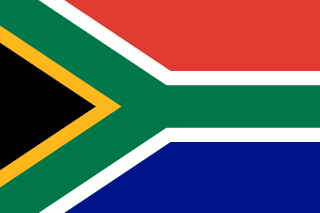
Welcome to South Africa
South Africa is a country at the southern end of the African continent, bordered by the Atlantic and Indian Oceans.
Its landscapes include mountains, grasslands, forests, deserts, coastlines and wildlife reserves.
From Johannesburg and Pretoria to Cape Town, Durban, Gqeberha and countless rural communities, South Africa offers many different experiences of life.
It is internationally known for its cultural diversity, music, wildlife, sporting achievements and struggle against apartheid.
But South Africa is much more than its history or natural beauty.
It is the story of parents raising children, teachers guiding students, workers supporting families, nurses caring for patients, and grandparents passing along memories of earlier generations.
It is also the story of people living with poverty, homelessness, unemployment, trauma or loneliness.
"To understand South Africa, we must discover the humanity behind its flag."
🏡 A Day in the Life of South Africa
Imagine an ordinary morning somewhere in South Africa.
In Johannesburg, commuters travel to offices, factories, markets and workshops.
In Cape Town, a parent prepares children for school while a fisher heads toward the ocean.
In Durban, a nurse begins a hospital shift.
In Pretoria, a student prepares for university.
In a rural village, a farmer tends crops or livestock.
In a township, a small business owner prepares for another day serving neighbours.
Some households have reliable electricity, secure employment, comfortable homes and extensive opportunities.
Other households experience unemployment, inadequate housing, unreliable services or difficulty obtaining food.
📜 South Africa's Long History
The lands of modern South Africa have been home to human communities for thousands of years.
The histories of the San, Khoikhoi and other Indigenous peoples are essential to understanding the region.
Bantu-speaking communities established diverse agricultural and trading societies over many centuries.
European colonial settlement began at the Cape in 1652 under the Dutch East India Company.
Colonial expansion involved land dispossession, slavery, violent conflict and the disruption of Indigenous communities.
British imperial rule, the South African War of 1899-1902, and the formation of the Union of South Africa in 1910 further shaped the country.
Black South Africans and other communities experienced laws and institutions that restricted land ownership, movement and political rights.
These inequalities were later entrenched under apartheid.
"We understand our shared humanity more deeply when we listen to the histories of people whose voices were silenced."
🕯️ Apartheid — A History of Injustice
Apartheid was a system of institutionalized racial segregation and discrimination implemented by South Africa's National Party government beginning in 1948.
Laws classified people by race and controlled where they could live, work, study and travel.
Black South Africans were denied equal political rights and faced forced removals, unequal services and severe restrictions.
Other racialized communities, including people classified as Coloured or Indian, also experienced systematic discrimination.
Families Separated
Apartheid laws disrupted families and neighbourhoods through forced removals and restrictions on movement.
Children often attended racially segregated schools with grossly unequal resources.
Communities experienced poverty, violence, fear and humiliation.
Resistance and Courage
Many individuals and organizations resisted apartheid.
Nelson Mandela, Oliver Tambo, Walter Sisulu, Albertina Sisulu, Desmond Tutu, Steve Biko, women's organizations, labour movements and many ordinary citizens played roles in the struggle for justice.
The Sharpeville massacre in 1960 and the Soweto uprising in 1976 became important symbols of resistance and state repression.
Thousands of people were imprisoned, exiled, injured or killed in the struggle.
🕊️ 1994 — The Birth of a New Democracy
After years of struggle, negotiations and political change, South Africa held its first national democratic election with universal adult suffrage in April 1994.
On April 27, people who had previously been denied the vote were finally able to participate on equal terms.
Nelson Mandela became South Africa's first president elected under universal adult suffrage on May 10, 1994.
The country's new flag became a powerful symbol of a shared future.
The Rainbow Nation
The expression "Rainbow Nation" became associated with the hope that people of different races, cultures and backgrounds could live together in dignity.
The transition did not immediately eliminate poverty, inequality, mistrust or the effects of apartheid.
But it established a democratic foundation for the pursuit of equal rights.
"Freedom becomes meaningful when every person can participate in shaping their country's future."
🤝 Truth, Reconciliation and Healing
After apartheid, South Africa established the Truth and Reconciliation Commission, chaired by Archbishop Desmond Tutu.
The commission investigated serious human rights abuses committed during the apartheid era by different actors.
Victims and survivors shared painful experiences, sometimes publicly for the first time.
The process sought to establish truth, encourage accountability and support national reconciliation.
Reconciliation has never been simple or complete.
Many families continue to live with the effects of historical injustice, economic inequality, grief and trauma.
Can Forgiveness and Justice Work Together?
Forgiveness is a deeply personal decision and cannot be demanded from those who have suffered.
Acknowledgement of harm, meaningful accountability, reparation and fair treatment are important parts of lasting healing.
A society can work toward peaceful relationships without pretending that past injustice never happened.
"Reconciliation is not forgetting the truth. It is finding ways to build a future that does not repeat the suffering of the past."
🌍 Twelve Official Languages and Many Cultures
South Africa has twelve official languages:
isiZulu, isiXhosa, Afrikaans, English, Sepedi, Sesotho, Setswana, siSwati, Tshivenda, itsonga, isiNdebele and South African Sign Language.
Correctly written, Xitsonga is the name of one of these official languages.
South African Sign Language became the country's twelfth official language through a constitutional amendment.
A Country of Many Communities
South Africa is home to Zulu, Xhosa, Sotho, Tswana, Ndebele, Venda, Tsonga, Swazi, Khoisan-descended, Afrikaner, English-speaking, Indian South African and many other communities.
Individuals may identify with more than one culture, language or tradition.
No single group represents the experiences of every person in South Africa.
❤️ Family, Friendship and Ubuntu
Family and community connections are important parts of life for many South Africans.
Households include parents and children, grandparents, extended relatives, couples, single parents and people living alone.
Family arrangements differ greatly across regions, cultures and circumstances.
Ubuntu
Ubuntu is a philosophical tradition often expressed through the idea that our humanity is deeply connected to the humanity of others.
It emphasizes relationships, shared responsibility, dignity and compassion.
The idea has different interpretations and cultural expressions, but its central message connects beautifully with this website.
"I am because we are. I matter. You matter. We all matter."
Yet not everyone has a supportive family or community.
Some individuals experience loneliness, abandonment, family violence or grief.
Compassion requires that people outside our immediate circles are valued too.
🎵 South African Culture and Traditions
🎶 Music
South Africa has vibrant musical traditions, including gospel, jazz, mbaqanga, kwaito, amapiano, choir singing and many regional styles.
🍲 Food
South African cuisine includes braai, pap, chakalaka, bobotie, bunny chow, biltong and diverse regional dishes.
📚 Literature
South African writers have explored identity, justice, history, love, politics and the human experience.
🎨 Art
Painting, beadwork, textiles, sculpture, photography, theatre and modern visual art reflect the country's many traditions.
🏉 Sports
Rugby, football, cricket, athletics, netball and other sports bring communities together.
🎉 Heritage
Heritage Day, music festivals, religious holidays and community celebrations express South Africa's diversity.
🎓 Children and Education
Children throughout South Africa attend schools, make friends and imagine their futures.
Some enjoy well-resourced schools, sports facilities and extensive opportunities.
Others experience poverty, overcrowded classrooms, long journeys to school or unequal access to educational resources.
The education system continues to confront inequalities shaped partly by the legacy of apartheid.
Young people may experience bullying, discrimination, family hardship or mental health challenges.
Every child deserves safe classrooms, nutritious food, appropriate support and a genuine opportunity to reach their potential.
"A child's future should never be determined by their race, income or place of birth."
🕊️ Faith, Spirituality and Beliefs
Christianity is widely practised in South Africa, with many churches and denominations.
South Africa is also home to Muslim, Hindu, Jewish, Buddhist and other religious communities.
African traditional spiritual beliefs and practices remain important to many communities.
Some people identify as non-religious.
Faith communities have played different roles in South African history, including both support for and opposition to apartheid.
Freedom of religion and conscience is protected by the democratic Constitution.
"Different beliefs do not prevent us from recognizing the humanity within one another."
🌿 Landscapes, Wildlife and the Environment
South Africa is home to remarkable landscapes and ecosystems.
Table Mountain, the Drakensberg Mountains, the Karoo, grasslands, wetlands and coastal habitats all contribute to its natural heritage.
National parks such as Kruger protect important wildlife and habitats.
Environmental challenges include drought, flooding, water scarcity, pollution, habitat loss and climate change.
Reliable access to clean water and sanitation is also a fundamental human need.
Conservation efforts must consider both wildlife protection and the dignity and livelihoods of local communities.
"We share one Earth, and future generations depend on the choices we make today."
🌧️ Challenges Facing South Africa
South Africa has significant economic and cultural strengths.
Yet millions of people continue to face serious hardship.
Employment
The official unemployment rate was 33.6% in the second quarter of 2026, according to Statistics South Africa.
Housing and Homelessness
Informal settlements, overcrowded housing and homelessness affect many communities. Secure housing and basic services remain important priorities.
Poverty and Inequality
Many households struggle to meet their daily needs. Economic inequalities remain closely connected to historical injustice.
Mental Health
Anxiety, depression, grief, trauma and loneliness affect people across different ages and communities.
Violence and Safety
Crime, gender-based violence and family violence cause suffering. Survivors need safety, justice and appropriate support services.
Health and Care
Unequal healthcare access, HIV and tuberculosis remain important public health concerns.
🏛️ Democracy, Human Rights and Responsibility
South Africa is a constitutional democracy with national, provincial and local governments.
It has nine provinces and a national Parliament with two houses: the National Assembly and the National Council of Provinces.
The Constitution adopted in 1996 establishes fundamental rights, including equality, freedom of expression and human dignity.
The country has an independent judiciary and a Constitutional Court.
Citizens hold a wide range of political views and participate through elections, public debate, community organizations and peaceful protest.
Contemporary debates include employment, housing, land, public services, corruption, security and inequality.
No political party or government speaks for every individual.
"Democracy is strongest when every person's rights are respected, including the rights of those who disagree."
🎖️ Honouring South African Soldiers, Veterans and Civilians
South Africa's military history includes colonial conflicts, the South African War, the two world wars, the apartheid era and modern peace-support missions.
The World Wars
South African service personnel participated in the First and Second World Wars.
Black, Coloured, Indian and white South Africans served in different military and support roles, often under unequal racial policies.
Many lost their lives or returned home with lasting injuries.
Remembering Resistance
South Africa's struggle against apartheid also involved activists, community organizers, political prisoners, armed movements and ordinary civilians.
People suffered on different sides of political violence, while the fundamental injustice of apartheid must be acknowledged.
Modern Service
The South African National Defence Force was formed in 1994 through the integration of forces from different backgrounds.
Its personnel have participated in peace-support and regional security missions.
Some service members and their families experience injury, loss, grief and psychological trauma.
Honouring service means remembering those who suffered, providing care to veterans and protecting the dignity of civilians.
"May remembering those who suffered in conflict strengthen our commitment to a world where peace is protected."
🤝 South Africans Helping One Another
Across South Africa, volunteers, charities, faith communities and neighbourhood organizations help people experiencing hardship.
Some provide food parcels, school support, housing assistance and healthcare.
Others work with children, older adults, survivors of violence, people with disabilities and those experiencing homelessness.
Community members also support one another during floods, fires and other emergencies.
These actions reflect the practical meaning of Ubuntu: recognizing that the well-being of one person is connected to the well-being of others.
"One person caring for another can be the beginning of a better world."
🌅 South Africa's Dreams for Tomorrow
Imagine a South Africa where every child grows up feeling safe, loved and valued.
Where families can find meaningful work, affordable housing and reliable services.
Where people experiencing homelessness receive stable housing and practical support.
Where women and children can live free from violence and fear.
Where older adults receive dignity, companionship and care.
Where people of different races, languages and religions participate fully in community life.
Where the injustices of apartheid are remembered honestly and their effects continue to be addressed.
Where veterans and their families receive meaningful recognition and assistance.
Where nature and wildlife are protected for generations to come.
And where every person has a genuine opportunity to flourish in freedom, safety and peace.
"The promise of freedom becomes real when human dignity is part of everyday life."
🌎 Your Journey of Understanding
You have explored some of South Africa's history, cultures, everyday life, achievements and challenges.
Now consider three questions connecting your mind, heart and spirit.
Click each question to reveal its reflection.
🧠 MENTALLY - What have you learned?
Before this journey, what came to mind when you thought of South Africa?
Wildlife? Cape Town? Nelson Mandela? Apartheid? Rugby?
Did you know that South Africa has twelve official languages?
How did apartheid affect the opportunities and rights of different communities?
Why is it important to understand both the achievement of democracy and the challenges that remain?
What assumption might you now reconsider?
❤️ EMOTIONALLY - What touched your heart?
Imagine a grandmother remembering a time when apartheid laws prevented her from living where she wished.
A parent searching for employment to provide food for their children.
A young person working toward a brighter future despite poverty.
A family whose home lacks reliable water or electricity.
A veteran carrying memories of conflict.
A volunteer offering a warm meal and a listening ear.
How would hearing these individual stories change your understanding?
What could compassion look like in action?
🕊️ SPIRITUALLY - What connects us?
South Africa's history demonstrates the harm caused by racial injustice and dehumanization.
It also contains stories of courage, solidarity and reconciliation.
What does Ubuntu — our shared humanity — mean in your life?
Can we forgive without forgetting or excusing injustice?
How can truth, accountability and compassion work together?
What would change if everyone believed that their own life and the lives of others truly mattered?
How could inner peace help you bring kindness into someone else's life?
What small act of compassion could you offer today?
The South Africa Behind the Flag
Somewhere in South Africa, a mother prepares breakfast for her children.
A teacher helps a student discover their potential.
A farmer works under the African sun.
A musician shares a melody passed down through generations.
A grandmother tells a story about the struggle for freedom.
A nurse comforts a patient.
A volunteer helps a family in need.
A veteran remembers a fallen friend.
A young person dreams of a future without prejudice or fear.
And somewhere, one person helps another feel that they matter.
"Many languages.
Many cultures.
A history of courage.
A continuing journey toward justice.
One shared humanity."
That is the South Africa behind the flag.
Return to Beginning Explore Another NationSources and Further Reading
Learn more about South Africa's history, democracy, languages, society and challenges.
South African Government — History
South African Government — Freedom and Democracy
The Presidency of South Africa
This page provides a broad introduction and does not represent every person's experiences, beliefs or political views.