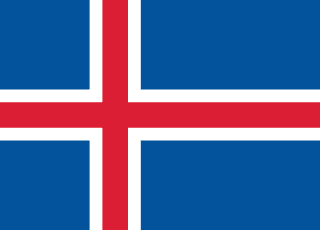
Welcome to Iceland
Iceland is an island nation in the North Atlantic Ocean, known for its volcanic landscapes, glaciers, waterfalls, geothermal springs and remarkable natural beauty.
Its capital, Reykjavík, is the centre of the country's political and cultural life.
Other communities include Akureyri, Ísafjörður, Egilsstaðir, Selfoss and fishing villages around the island.
Iceland has a rich history of storytelling, seafaring, literature, music and connections with the natural world.
But Iceland is far more than its famous scenery.
It is the story of parents raising children, teachers sharing knowledge, fishers working at sea, healthcare professionals caring for patients, and seniors remembering earlier generations.
Like every nation, Iceland has achievements to celebrate and challenges to confront.
"To understand Iceland, we must discover the humanity behind its flag."
🏡 A Day in the Life of Iceland
Imagine an ordinary morning somewhere in Iceland.
In Reykjavík, a parent helps children prepare for school.
In Akureyri, a nurse begins a hospital shift.
In a coastal village, a fisher prepares for another day on the ocean.
In a rural community, a farmer checks on sheep or horses.
In a geothermal town, a worker helps maintain essential services.
A teacher welcomes students to class. A grandparent visits a local café. A young adult travels to work.
Some families enjoy secure homes, stable employment and financial comfort.
Others face high living costs, housing difficulties, illness or loneliness.
📜 Iceland's History and Identity
Iceland was settled primarily by people from the Norse world, along with people of Gaelic origin, during the ninth and tenth centuries.
In 930, the Alþingi, or Althing, was established at Þingvellir.
It became one of the world's longest-standing parliamentary traditions.
Medieval Iceland developed a remarkable literary culture.
The Icelandic sagas preserved stories about families, conflicts, journeys, community and identity.
Foreign Rule and Independence
Over the centuries, Iceland came under Norwegian and later Danish rule.
In 1918, Iceland became a sovereign kingdom in personal union with Denmark.
During the Second World War, Iceland was occupied by British forces in 1940.
United States forces subsequently assumed defence responsibilities.
On June 17, 1944, Iceland formally became an independent republic.
The country later developed modern democratic institutions and expanded its economy and public services.
"Independence is more than a date in history. It is also the responsibility to protect the freedom and dignity of future generations."
❤️ Family, Friendship and Community
Iceland's relatively small population helps shape everyday relationships and community life.
Families come in many forms, including couples, single parents, extended households and people living alone.
Connections often develop through schools, sports, community centres, workplaces and volunteer organizations.
Many Icelanders enjoy spending time with family and friends, including visits to geothermal swimming pools.
Public swimming pools are popular places for recreation and social connection.
But a smaller population does not mean that every individual feels connected or supported.
Some people experience loneliness, family stress or social isolation.
Community kindness can make an important difference in their lives.
"Belonging begins when someone knows they are seen, valued and remembered."
🎵 Iceland's Culture and Traditions
📚 Sagas
Icelandic sagas, poetry and storytelling form an important part of the country's literary heritage.
🎶 Music
Iceland has vibrant folk, classical, rock, electronic and contemporary music scenes, with artists known internationally.
🍲 Food
Traditional foods include fish, lamb, skyr, rye bread and many regional specialties.
🏊 Swimming
Geothermal swimming pools provide opportunities for exercise, relaxation and social connection.
🎉 Celebrations
Independence Day, Christmas, Þorrablót and other traditions bring communities together.
🏇 Outdoor Life
Hiking, horse riding, camping, fishing, football and handball are enjoyed by different communities.
🎓 Children and Education
Children throughout Iceland attend school, build friendships and discover their individual abilities.
Iceland has a public education system that supports learning and personal development.
Students study languages, mathematics, science, history, arts and other subjects.
Many children participate in sports, music and community activities.
Some students have access to extensive educational resources.
Others experience difficulties related to bullying, disability, family hardship or mental health.
Children from immigrant families may need additional language support and assistance with integration.
Every child deserves safety, friendship, encouragement and the opportunity to reach their potential.
"Every child deserves a future that begins with hope."
🌍 Iceland's Growing Cultural Diversity
Iceland is becoming increasingly diverse.
Many residents have roots in countries beyond Iceland, including Poland and other European nations, as well as communities around the world.
According to Statistics Iceland, immigrants represented 19.6% of the population on January 1, 2026.
This diversity enriches Icelandic society through languages, cultures, skills and personal experiences.
Newcomers may also face challenges in learning Icelandic, finding suitable housing, obtaining employment and building social connections.
A welcoming society recognizes the contributions and humanity of people from every background.
🌋 Fire, Ice and the Power of Nature
Iceland is shaped by volcanic activity, glaciers, geothermal energy and the power of the North Atlantic Ocean.
Its landscapes include geysers, lava fields, waterfalls, glaciers and mountains.
The northern lights can sometimes be seen during dark, clear nights.
Volcanoes and Earthquakes
Iceland lies along the boundary between the North American and Eurasian tectonic plates.
Volcanic eruptions and earthquakes are important natural hazards.
Communities on the Reykjanes Peninsula, including Grindavík, have experienced serious disruption because of volcanic activity.
Evacuations, property damage and uncertainty can place emotional and financial pressure on families.
Renewable Energy
Iceland makes extensive use of geothermal and hydroelectric energy.
Renewable resources provide nearly all of its electricity.
At the same time, environmental questions remain concerning transportation, tourism, ecosystems and climate change.
"Nature reminds us that human beings are powerful when we work together, but vulnerable when we stand alone."
🕊️ Faith, Spirituality and Beliefs
Christianity, particularly Lutheran Christianity, has influenced Icelandic history and culture.
The Evangelical Lutheran Church of Iceland is the country's national church.
Iceland is also home to Catholic, Muslim, Buddhist, Ásatrú and other religious communities.
Many residents identify as non-religious.
Individuals may find meaning through faith, family, nature, creativity or service to others.
Freedom of religion and conscience is an important democratic principle.
"Our beliefs may differ, but compassion and dignity belong to everyone."
🛠️ Work, Healthcare and Everyday Needs
Icelanders work in fishing, tourism, healthcare, education, technology, renewable energy, construction and many other fields.
Fishing and seafood processing remain important parts of the economy.
Tourism has also become a significant source of employment and economic activity.
Iceland provides public healthcare, education and social support through various institutions.
However, access to some services can differ between Reykjavík and more remote communities.
Some families enjoy stable incomes, secure housing and comfortable living conditions.
Others experience high living costs, housing difficulties or financial uncertainty.
The desire for safe housing, meaningful employment and reliable healthcare is shared by families everywhere.
🌧️ Challenges Facing Iceland
Iceland has strong community institutions and many social achievements.
Yet no society is free from human hardship.
Housing
High housing costs and limited suitable housing create difficulties for some individuals and families. Homelessness and housing insecurity also require attention.
Mental Health
Iceland's 2026 public health indicators reported that 30% of adults rated their mental health as fair or poor in 2025.
Living Costs
In 2025, 15.5% of respondents reported difficulty making ends meet, according to national public health indicators.
Volcanic Disruption
Earthquakes and volcanic activity can force families from their homes and affect businesses and community life.
Social Inclusion
Some newcomers, minorities and other communities experience language barriers, discrimination or difficulty finding belonging.
Older Adults
Some seniors experience loneliness, health challenges or difficulties accessing support and care.
🏛️ Democracy, Equality and Human Rights
Iceland is a parliamentary republic with an elected president and a government responsible to parliament.
Its parliament, the Alþingi, has 63 members.
Iceland has a long democratic tradition and modern legal protections for individual rights.
It is not a member of the European Union, but participates in the European Economic Area.
Public debates include housing, economic policy, immigration, environmental protection and national security.
Icelandic society includes many different political and social views.
No government or political party speaks for every resident.
"Democracy grows stronger when freedom, accountability and human dignity are protected."
🎖️ Iceland, Peace and Honouring Those Who Serve
Iceland has an unusual place in international military history.
Unlike most NATO members, Iceland has no standing army.
It nevertheless became a founding member of NATO in 1949.
Its national security arrangements include a Coast Guard, police services, air defence monitoring and cooperation with allied countries.
Remembering the Second World War
Iceland remained officially neutral during the Second World War, but its strategic North Atlantic location brought foreign military presence.
Icelandic merchant seafarers and fishers faced danger during wartime voyages.
Some lost their lives at sea.
Families experienced loss, uncertainty and the effects of global conflict.
Service Beyond the Battlefield
Icelandic Coast Guard personnel, search-and-rescue teams, emergency responders and humanitarian workers provide important public service.
Their work may involve dangerous sea conditions, natural disasters, rescue missions and other emergencies.
Iceland also participates in international security and peace-support activities.
Honouring service means remembering those who lost their lives, supporting people affected by danger and recognizing the human cost of conflict.
It also means working to create a world where fewer people must experience war.
"May we honour those who serve, remember those who sacrificed, and protect the peace of future generations."
🤝 Icelanders Helping One Another
Throughout Iceland, volunteers and community organizations support people experiencing hardship.
Some help families facing financial difficulties, housing insecurity or illness.
Others assist seniors, children, newcomers and people experiencing mental health challenges.
Search-and-rescue volunteers play an especially important role in Iceland.
During volcanic eruptions, severe storms and other emergencies, community cooperation can protect lives.
These efforts remind us that humanity is not simply a belief.
It is expressed through action.
"Sometimes the strongest people are those who reach out to help someone who is struggling."
🌅 Iceland's Dreams for Tomorrow
Imagine an Iceland where every child feels safe, valued and encouraged.
Where families have secure, affordable homes.
Where people experiencing homelessness receive meaningful support and stable housing.
Where mental health services are accessible to everyone who needs them.
Where older adults receive dignity, care and companionship.
Where newcomers and established communities build friendships and understanding.
Where people affected by natural disasters receive help and hope.
Where glaciers, wildlife and natural landscapes are protected for future generations.
Where those who serve their communities are recognized and supported.
And where international cooperation and peaceful dialogue help protect human life.
"The future we build together should be one where every human life matters."
🌎 Your Journey of Understanding
You have explored some of Iceland's history, traditions, daily life and challenges.
Now consider three questions that connect your mind, heart and spirit.
Click each question to reveal its reflection.
🧠 MENTALLY - What have you learned?
Before this journey, what came to mind when you thought about Iceland?
Volcanoes? Glaciers? Northern lights? Beautiful waterfalls?
Did you also consider the country's democratic history, growing diversity, mental health challenges and unusual security arrangements?
What can Iceland teach us about community cooperation and responding to natural disasters?
What assumption might you now reconsider?
❤️ EMOTIONALLY - What touched your heart?
Imagine a family forced to leave its home because of volcanic activity.
A young person struggling with anxiety or loneliness.
A senior living alone during a long winter.
A fisher whose family worries about dangerous conditions at sea.
A volunteer searching for someone missing in the mountains.
How would hearing their individual stories change your understanding of Iceland?
What could compassion look like in action?
🕊️ SPIRITUALLY - What connects us?
Iceland is a country shaped by powerful forces of nature.
What can this teach us about human vulnerability, resilience and the importance of caring for others?
Can inner peace help us remain compassionate during uncertainty and fear?
How can we honour those who protect communities while working toward a world with less violence?
What small act of kindness could you offer today to help someone feel that they matter?
The Iceland Behind the Flag
Somewhere in Iceland, a parent prepares breakfast for a child.
A teacher encourages a student to follow a dream.
A fisher heads out onto the cold Atlantic.
A nurse comforts a patient.
A grandparent shares a family story.
A volunteer prepares for a rescue mission.
A family rebuilds its life after being displaced.
A neighbour helps someone who feels alone.
And somewhere, a young person dreams of a peaceful and meaningful future.
"A land of fire and ice.
A history of resilience.
Countless human stories.
One shared humanity."
That is the Iceland behind the flag.
Return to Beginning Explore Another NationSources and Further Reading
Learn more about Iceland's history, culture, society, public health and international relationships.
Nordic Cooperation — Facts About Iceland
Iceland Directorate of Health — Public Health Indicators 2026
Iceland Civil Protection and Emergency Management
This page provides a broad introduction to Iceland and does not represent every person's experiences, beliefs or political views.