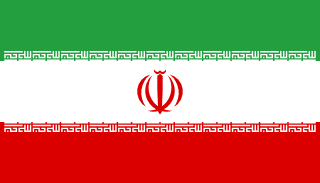
Welcome to Iran
Iran, historically known internationally as Persia, is a country in Western Asia with a civilization stretching back thousands of years.
Its landscapes include mountains, deserts, fertile valleys, ancient cities and coastlines.
Iran is known for its poetry, architecture, carpets, gardens, literature, science and traditions.
Cities such as Tehran, Isfahan, Shiraz, Tabriz and Mashhad each have distinctive histories and communities.
But Iran is more than its monuments, religious institutions or political headlines.
It is the story of ordinary people.
Parents raising children. Teachers helping students. Doctors caring for patients. Workers supporting families. Seniors sharing memories.
Many Iranians have also faced political restrictions, economic hardship, discrimination and the consequences of conflict.
"To understand Iran, we must discover the humanity behind the headlines."
🏡 A Day in the Life of Iran
Imagine an ordinary morning somewhere in Iran.
In Tehran, commuters make their way through busy streets and neighbourhoods.
In Isfahan, a shopkeeper prepares to welcome customers.
In Shiraz, a student heads to university.
In a rural community, a farmer begins working in the fields.
A mother prepares breakfast. A child packs schoolbooks. A grandmother welcomes relatives for tea.
Life differs between wealthy urban neighbourhoods, industrial towns, agricultural communities and remote regions.
Some households enjoy financial stability. Others struggle with inflation, unemployment, housing costs and uncertain futures.
🏛️ Iran's Ancient History and Diverse Peoples
Iran has a long and influential history that includes the Achaemenid, Parthian and Sasanian empires.
Persian civilization contributed to literature, philosophy, medicine, mathematics, architecture and the arts.
Ancient sites such as Persepolis are reminders of the country's historical heritage.
Iran is also home to many ethnic and linguistic communities.
Persians, Azerbaijanis, Kurds, Lurs, Arabs, Baloch, Turkmen and other groups have distinct cultures and traditions.
Persian, also called Farsi, is the official language.
Other languages spoken include Azerbaijani, Kurdish, Arabic, Balochi and many more.
These different peoples contribute to the cultural richness of modern Iran.
Their languages, customs and identities deserve recognition and respect.
❤️ Family, Friendship and Community
Family relationships are important in many Iranian communities.
Relatives frequently gather for meals, holidays, weddings and other occasions.
Grandparents may play important roles in family life and the sharing of traditions.
Hospitality is a valued cultural tradition in many households.
Friends and neighbours may provide support during difficult times.
Some families have been separated through migration, economic circumstances or conflict.
Many Iranians living abroad continue to maintain connections with loved ones inside Iran.
"No matter where we are born, the need for love and belonging connects us."
🎵 Iran's Culture and Traditions
Iran has a remarkable artistic heritage shaped by centuries of cultural exchange.
🌷 Nowruz
Nowruz, the Persian New Year, celebrates the arrival of spring, renewal and new beginnings. Families gather, share food and observe traditions such as the Haft-Sin table.
🍚 Food
Iranian cuisine includes rice dishes, saffron, herbs, stews, kebabs, bread and regional specialties such as ghormeh sabzi and fesenjan.
📚 Poetry
Poets such as Hafez, Saadi, Rumi and Ferdowsi have influenced literature and cultural life across generations and beyond Iran.
🎶 Music
Traditional Persian music, regional folk traditions and contemporary styles reflect the country's diverse artistic life.
🎨 Arts
Carpet weaving, tilework, miniature painting, calligraphy, ceramics and architecture are important artistic traditions.
🏐 Sports
Football, wrestling, volleyball, weightlifting, martial arts and other sports attract participants and supporters.
These traditions are a source of identity, memory and pride for many communities.
🎓 Children and Education
Children throughout Iran attend schools, form friendships and imagine their futures.
Iran has a long tradition of valuing learning, literature, science and education.
Many young people study mathematics, medicine, engineering, technology and the arts.
Educational opportunities can differ by geography, income, gender and family circumstances.
Some young Iranians experience considerable pressure associated with examinations and employment prospects.
Political restrictions, economic uncertainty and regional conflict can add to stress for children and families.
Every child deserves safety, education, encouragement and opportunities to reach their potential.
"A child should be free to dream of tomorrow, not live in fear of what tomorrow may bring."
🕊️ Faith, Spirituality and Beliefs
Iran has a rich religious and philosophical history.
Shia Islam is the official state religion and plays a prominent role in public life.
The country is also home to Sunni Muslims, Christians, Jews, Zoroastrians, Baha'is and people with secular or other beliefs.
Different religious communities do not all enjoy the same legal recognition or protections.
Human-rights monitors have documented discrimination against religious minorities, including Baha'is.
Individuals also differ in how they practise faith and understand spirituality.
"Freedom of belief and respect for human dignity belong to everyone."
🌸 Women, Girls and the Pursuit of Dignity
Iranian women have made important contributions to education, medicine, literature, science, business, sports and cultural life.
Many women have also challenged discriminatory laws and restrictions on personal freedoms.
The Woman, Life, Freedom movement gained international attention following the death of Mahsa Jina Amini in September 2022.
Women and girls have faced restrictions including compulsory hijab requirements and inequalities in aspects of family law.
Human-rights organizations have documented arrests, harassment and punishment of people challenging such restrictions.
Views among Iranian women and men are diverse, and no single movement speaks for everyone.
Every woman and girl deserves dignity, personal safety, equal protection under the law and meaningful opportunities.
🛠️ Work, Housing and Everyday Needs
Iranians work in healthcare, education, agriculture, manufacturing, technology, commerce, transportation and many other fields.
The country has significant energy resources and a diverse industrial and agricultural base.
Economic pressures affect households through inflation, employment uncertainty and housing costs.
International sanctions, domestic economic policies and regional conflict have influenced the economy in different ways.
Some families enjoy comfortable living conditions, while others struggle with essential expenses.
Access to quality services and opportunities also differs between regions and communities.
🌧️ Challenges Facing the Iranian People
Behind Iran's rich history and cultural achievements are individuals experiencing serious challenges.
Economic Hardship
Inflation, unstable incomes and rising living costs can make everyday life difficult for families.
Human Rights
Restrictions on freedom of expression, peaceful assembly, religious practice and political participation affect many people.
Mental Health
Anxiety, depression, trauma, grief and uncertainty can affect individuals and communities.
Discrimination
Women and members of some ethnic and religious minorities experience documented inequalities and restrictions.
Environment
Water shortages, drought, air pollution and other environmental pressures affect different parts of the country.
War and Insecurity
Military escalation, civilian casualties, displacement and damaged infrastructure have affected families and essential services.
🏛️ Government, Freedom and Human Rights
Iran is officially the Islamic Republic of Iran.
Its political system includes elected institutions alongside powerful unelected religious and state authorities.
The Supreme Leader holds extensive constitutional authority.
Candidates for major elected offices face institutional vetting and restrictions.
Human-rights organizations and United Nations investigators have documented restrictions on journalists, activists, political opponents and protesters.
Protests and Repression
Nationwide protests beginning in December 2025 were followed by severe state repression.
In September 2026, a United Nations fact-finding mission reported extensive killings, arbitrary detentions, torture and other serious violations.
The mission concluded that many documented violations amounted to crimes against humanity.
Its investigation also described major internet restrictions, which limited access to information and communication.
Iranian authorities have rejected or disputed many international accusations.
Independent investigation, due process and accountability remain important principles for protecting human rights.
🕊️ Iran and the Human Cost of Conflict
Iran has experienced decades of regional tensions, sanctions and international political disputes.
The Iran-Iraq War from 1980 to 1988 caused devastating losses and left lasting memories for families.
Conflict in 2026
On February 28, 2026, a new major escalation of hostilities involving Iran, Israel and the United States began.
The conflict caused civilian deaths, injuries, displacement and damage to infrastructure.
United Nations humanitarian reporting described pressures on hospitals, businesses, public services and family livelihoods.
The World Health Organization also reported damage to health facilities and disruptions in access to care.
Families faced fear, separation, grief and uncertainty.
International humanitarian law requires all parties to distinguish civilians from combatants and protect civilians from unlawful attacks.
The protection of human life is not limited by nationality, religion or political allegiance.
Holding governments and armed forces accountable is compatible with compassion for ordinary families on every side.
"No mother's grief is less important because she lives on the other side of a border."
🎖️ Remembering Soldiers, Veterans and Civilians
Iranian military personnel and civilians have experienced major sacrifices during different periods of conflict.
The Iran-Iraq War left a profound legacy of deaths, injuries and family grief.
Other conflicts and military operations have affected later generations.
Military service can involve injury, loss, separation and psychological trauma.
Civilians also carry the burdens of war, including destroyed homes and interrupted family lives.
Honouring the humanity of soldiers and veterans does not mean endorsing every military action.
It also means remembering civilians, respecting human rights and working to prevent future wars.
"May remembrance strengthen our desire to protect life and build peace."
🌅 Iran's Dreams for Tomorrow
Imagine an Iran where every child can learn without fear.
Where women and girls can pursue their dreams with dignity and equal opportunity.
Where families have secure homes, meaningful employment and access to healthcare.
Where people of different religions and cultures can live without discrimination.
Where individuals can express their ideas peacefully without fear of punishment.
Where the memories of those who have suffered lead toward justice and healing.
Where disputes with other countries are resolved through diplomacy rather than violence.
Where children inherit a future shaped by opportunity, understanding and peace.
"Hope begins when we recognize that every person's future matters."
🌎 Your Journey of Understanding
You have explored some of the history, culture, family life and challenges of Iran.
Now consider three questions about our shared humanity.
Click each question to reveal its reflection.
🧠 MENTALLY - What have you learned?
When you hear the word Iran, what comes to mind?
Its government? Its conflicts? Its religious laws?
Or do you also think of the country's poets, artists, families, students and workers?
Can you recognize a nation's cultural achievements while critically examining its government's human-rights record?
What assumption might you now reconsider?
❤️ EMOTIONALLY - What touched your heart?
Imagine a young Iranian woman hoping to shape her own future.
A father struggling to afford groceries for his family.
A mother worrying about her child during military attacks.
A family grieving the death or imprisonment of a loved one.
How might hearing their personal stories change the way you see Iran?
How can compassion be expressed through understanding and meaningful action?
🕊️ SPIRITUALLY - What connects us?
Whether people are Muslim, Christian, Jewish, Baha'i, Zoroastrian or non-religious, what human needs do they share?
Do we not all seek dignity, security, love and belonging?
Can we stand for freedom and accountability while recognizing the humanity of those whose beliefs differ from ours?
What small act of kindness might help build greater understanding between people of different nations?
The Iran Behind the Flag
Somewhere in Iran, a grandmother is preparing a family meal.
A student is studying late into the evening.
A musician is playing a melody passed down through generations.
A teacher is encouraging a child to follow a dream.
A parent is hoping for safety and stability.
A young woman is imagining a future with greater opportunity.
And somewhere, a family is dreaming of a life without fear or war.
"Ancient heritage.
Countless human stories.
Dreams of dignity and peace.
One shared humanity."
That is the Iran behind the flag.
Return to Beginning Explore Another NationSources and Further Reading
Explore more information about Iran's culture, humanitarian situation and human rights.
UNESCO — Nowruz and Cultural Heritage
United Nations — Iran Fact-Finding Mission
World Health Organization — Middle East Conflict
Human Rights Watch — Iran 2026
This page is a broad introduction to Iranian life and does not represent the experiences or beliefs of every person living in Iran.
Humanitarian and political circumstances can change.