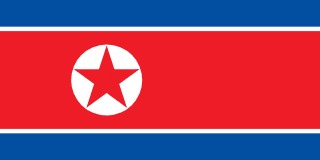
Welcome to North Korea
North Korea, officially the Democratic People's Republic of Korea, is a country in East Asia occupying the northern portion of the Korean Peninsula.
It borders China, Russia and South Korea, with coastlines along the Yellow Sea and the Sea of Japan, also called the East Sea.
Its capital is Pyongyang.
Other important cities include Hamhung, Chongjin, Wonsan, Nampo, Sinuiju, Haeju and Kaesong.
North Korea is known internationally for its political system, military activities, nuclear weapons programme and tensions with neighbouring countries.
But the people who live there are much more than the actions of a government.
They include parents raising children, teachers sharing knowledge, farmers growing food, healthcare workers caring for patients and grandparents preserving memories.
They also include individuals experiencing poverty, illness, food insecurity, family separation and restrictions on personal freedom.
Understanding their lives is difficult because access for independent journalists, researchers and humanitarian organizations is severely restricted.
This journey recognizes what credible sources have established while acknowledging the experiences that remain unknown.
"To understand North Korea, we must see the humanity behind its flag."
🏡 A Day in the Life of North Korea
Imagine an ordinary morning somewhere in North Korea.
In Pyongyang, a parent prepares for work.
In a rural village, a farmer begins tending crops.
In Hamhung, a worker prepares for another day.
In a school, children begin their lessons.
In a hospital, a healthcare worker tries to provide care with the resources available.
Near the coast, a fisher prepares to go out on the water.
An older adult remembers earlier generations.
A mother hopes her children will have enough nutritious food.
Some families have better access to housing, food and services than others.
Life can vary significantly between the capital, other cities and rural regions.
Because independent observation is restricted, no outside description can fully represent the experiences of every household.
📜 The Korean Peninsula - A Shared Historical Heritage
Before the establishment of North and South Korea, the Korean Peninsula had centuries of shared history.
Early Korean Kingdoms
Korean history includes the kingdoms of Goguryeo, Baekje and Silla, along with later states and regional communities.
Goryeo
The Goryeo dynasty contributed to cultural, religious and artistic developments, and the English name Korea derives from Goryeo.
Joseon
The Joseon dynasty influenced Korean language, philosophy, education, art and government for centuries.
Hangul
The Korean writing system, Hangul, was introduced in the fifteenth century under King Sejong.
It became an important means of communication and cultural expression.
A Shared Cultural Foundation
People living north and south of the present border share many historical, linguistic and cultural connections.
Political division has not erased their human relationships or common heritage.
"A political border can divide a peninsula, but it cannot erase centuries of shared human history."
🕯️ Japanese Colonial Rule and the Division of Korea
Japan formally annexed Korea in 1910, beginning a colonial period that lasted until 1945.
Colonial Rule
Koreans experienced political repression, cultural restrictions, exploitation and forced mobilization during Japanese rule.
Many resisted colonial control through political, cultural and armed movements.
The Second World War
Japan's defeat in 1945 ended its colonial rule over Korea.
However, the peninsula was soon divided into zones of Soviet and American military occupation.
The 38th Parallel
The division initially followed a line near the 38th parallel.
Families and communities found themselves living on different sides of a new political boundary.
Two Governments
In 1948, separate governments emerged in northern and southern Korea.
The Democratic People's Republic of Korea was proclaimed in the north on September 9, 1948.
The Republic of Korea had been established in the south on August 15.
Human Consequences
Political division disrupted travel, communication, trade and family relationships.
🎖️ The Korean War, 1950–1953
On June 25, 1950, North Korean forces invaded South Korea.
The invasion began a devastating international conflict.
The Fighting
South Korean and United Nations forces, led principally by the United States, fought against North Korean forces.
Chinese forces entered the war in October 1950.
Soviet military assistance supported North Korea and China.
Devastation
The war caused immense destruction across the Korean Peninsula.
Cities, villages, roads, homes and essential infrastructure were damaged or destroyed.
Millions of soldiers and civilians died, were wounded or were displaced during the conflict.
Civilians
Families experienced bombing, hunger, separation, displacement and fear.
Atrocities and violations against civilians occurred during different phases of the war.
The Armistice
On July 27, 1953, an armistice stopped large-scale fighting.
It established arrangements including the Korean Demilitarized Zone.
The armistice was not a comprehensive peace treaty, and unresolved tensions have continued.
"The greatest hope after a devastating war is that no future generation will have to endure it again."
❤️ Families Separated by the Korean Border
One of the most heartbreaking consequences of the Korean War was the separation of families.
Parents, children, brothers, sisters and other relatives became stranded on opposite sides of the border.
Decades Apart
For many, separation lasted an entire lifetime.
Some families lost contact without ever knowing whether loved ones survived.
Family Reunions
At various times, North and South Korea arranged limited family reunion events.
These occasions allowed a small number of elderly relatives to meet after decades apart.
Others never had the opportunity.
Human Stories
Imagine an older adult remembering the face of a sibling last seen as a child.
A parent who never learned what happened to a son or daughter.
A family preserving photographs of relatives who could not cross the border.
The Meaning of Reunion
Every family deserves opportunities for safe contact, communication and reunion consistent with human rights.
"No family should spend a lifetime wondering whether the people they love are still alive."
🏛️ Government and Political Institutions
North Korea has a centralized political system dominated by the Workers' Party of Korea.
The Kim family has held national leadership since the country's establishment in 1948.
Historical Leadership
Kim Il Sung led North Korea from its establishment until his death in 1994.
He was succeeded by Kim Jong Il, who died in 2011.
Kim Jong Un subsequently became the country's principal leader.
Political Institutions
The state maintains formal legislative, executive and other institutions, but independent political competition is not available in the manner found in multiparty democracies.
Official Priorities
Government policy has emphasized national sovereignty, military security, economic development and political control.
International Concerns
United Nations investigators and human rights organizations have documented serious restrictions on freedoms and allegations of systematic abuses.
North Korean authorities have rejected many international human rights findings and characterize outside criticism as politically motivated.
People and Government
The political system should never be confused with the individual identity or moral worth of ordinary North Korean residents.
🕊️ Human Rights, Freedom and Accountability
Independent United Nations human rights investigations have documented grave concerns about conditions in North Korea.
The 2014 Commission of Inquiry
A United Nations Commission of Inquiry documented widespread and systematic human rights violations, including findings concerning crimes against humanity.
The September 2025 UN Assessment
A report by the UN High Commissioner for Human Rights reviewed developments from 2014 through May 2025.
It found that conditions had not meaningfully improved and had worsened in several areas.
Freedom of Expression
The UN documented severe restrictions on independent information, media and public expression.
Freedom of Movement
Travel within the country and across borders is tightly controlled.
Detention and Forced Labour
United Nations reporting describes political detention, forced labour, harsh punishment and barriers to accountability.
Religious Freedom
Independent religious activity is severely restricted, according to international human rights reporting.
The Need for Truth
Survivors and families affected by detention, disappearances and abuse deserve recognition, protection and the opportunity to seek justice.
"Freedom matters because every human being has a mind, a heart, a voice and a life worthy of respect."
🍚 Food Security and the Right to Nutrition
Food insecurity has been a longstanding humanitarian concern in North Korea.
The Famine of the 1990s
During the 1990s, North Korea experienced severe famine associated with economic collapse, food-system failures, flooding and government policies.
Large numbers of people died, although reliable estimates of the death toll differ.
Continuing Challenges
Limited agricultural land, harsh weather, shortages of inputs and restrictions on trade can affect food production and availability.
International Estimates
The World Food Programme cites an older estimate that approximately 10.7 million people were undernourished.
That number is based on earlier food-security assessments and should not be treated as a newly verified 2026 count.
Children and Mothers
Young children, pregnant women and breastfeeding mothers are particularly vulnerable to inadequate nutrition.
Humanitarian Assistance
International agencies have provided specialized nutritious foods, vaccination support and disaster-preparedness assistance when access has been possible.
Limited Information
Restrictions on independent monitoring make it difficult to determine the full current scale of deprivation.
"No child should go hungry because of political conflict, international isolation or decisions beyond their control."
🎓 Children, Education and Childhood
North Korean children attend schools, develop friendships and grow within their families and communities.
Formal education includes subjects such as mathematics, science, language, music and physical activity.
Different Circumstances
Access to adequate food, healthcare, school resources and other necessities can vary according to location and family circumstances.
Nutrition
UNICEF has documented concerns about chronic malnutrition and its effects on children's growth and development.
Vaccination
UNICEF reported that 3.3 million vaccine doses were delivered to North Korea in 2025 to support routine and catch-up immunization.
The United Nations reported that by the end of 2025, 99 percent of the relevant birth cohorts who had missed routine immunization had received the outstanding vaccinations.
Children's Rights
Every child deserves nutritious food, medical care, safety, education, play, friendship and protection from exploitation.
A Future Beyond Conflict
Children on both sides of the Korean border deserve opportunities to grow up without the fear of renewed war.
"A child should be known by their possibilities, not by the politics of the country in which they were born."
🎵 Korean Culture and Everyday Traditions
North Korean society shares many longstanding cultural roots with the wider Korean Peninsula.
🍲 Food
Rice, noodles, kimchi, vegetables, soups and regional dishes reflect Korean culinary heritage and local resources.
🎶 Music
Traditional Korean instruments, folk songs and organized performances are parts of cultural life.
🎨 Arts
Calligraphy, painting, embroidery, ceramics and other crafts connect to historical Korean artistic traditions.
📚 Language
Korean is spoken on both sides of the peninsula, with variations in vocabulary and usage reflecting decades of separation.
🎉 Celebrations
Seasonal holidays and traditional customs, including Lunar New Year traditions, reflect elements of shared Korean heritage.
⚽ Sport
Football, table tennis, gymnastics and other sports provide opportunities for participation and international competition.
State influence over public culture and media is substantial, and independent cultural expression is tightly restricted.
Yet cultural traditions can also carry family memories and personal meaning across generations.
🕊️ Faith, Spirituality and Freedom of Conscience
The Korean Peninsula has historical traditions involving Buddhism, Confucian philosophy, Christianity and Indigenous spiritual practices.
Religious buildings and cultural sites remain part of North Korea's historical heritage.
However, international human rights reporting documents severe restrictions on independent religious expression.
Information about private beliefs is especially difficult to verify because residents cannot speak freely to outside researchers.
Every individual deserves freedom of conscience and protection from persecution based on belief or nonbelief.
Spiritual well-being can also involve family, compassion, reflection, relationships and the search for meaning.
"No person should lose their dignity because they believe differently, question privately or seek meaning in their own way."
🌿 Mountains, Rivers, Forests and the Korean Landscape
North Korea contains mountainous regions, rivers, valleys, agricultural plains and long coastal areas.
Mount Paektu
Mount Paektu, on the border with China, is a volcanic mountain with a crater lake known as Heaven Lake.
The mountain carries historical and cultural significance.
Mount Kumgang
Mount Kumgang is known for its striking rocky peaks, valleys and natural scenery.
The Taedong River
The Taedong River passes through Pyongyang and supports surrounding communities and infrastructure.
Agriculture
Farming communities cultivate rice, maize, potatoes and other crops where conditions permit.
Environmental Challenges
Floods, droughts, erosion, landslides and climate-related changes can damage crops, homes and infrastructure.
Forestry and soil management are important to disaster resilience and food production.
"The beauty of the land belongs to the people who call it home, and its protection matters to generations yet to come."
🌧️ Challenges Facing People in North Korea
North Korea faces major humanitarian and human rights concerns, although independent data remain limited.
Food and Nutrition
Older World Food Programme assessments estimated widespread undernutrition affecting more than 40 percent of the population. Reliable current household figures are limited.
Freedom of Expression
United Nations reporting documents extensive restrictions on independent media, communication and public expression.
Family Separation
Many Korean families have been separated by the border and political circumstances for decades.
Healthcare and Medicines
Some communities face shortages of medical equipment, essential medicines, nutrition and other healthcare resources.
Forced Labour and Detention
UN investigations have described forced labour, political detention and severe restrictions on the rights of individuals.
Natural Disasters
Flooding, drought, storms and soil erosion can threaten farming communities, homes and food supplies.
🎖️ Honouring Soldiers, Veterans and Civilians of the Korean War
The Korean War caused suffering among North Korean, South Korean, Chinese, Canadian, American and other military personnel and among civilians across the peninsula.
North Korean Soldiers
Many North Korean soldiers died or were injured during the conflict.
The circumstances of individual service differed, including the choices and pressures faced by those involved.
South Korean Soldiers
South Korean forces suffered major casualties while defending their country during the war.
Chinese Military Service
Chinese forces entered the war in 1950, and many service members died or were wounded.
Canadian Soldiers
More than 26,000 Canadians served in Korea during the war.
According to Veterans Affairs Canada, 516 Canadians died in service.
Canadian military personnel fought in difficult conditions and endured significant hardship.
United Nations Forces
Military personnel from multiple countries served under the United Nations Command.
Korean Civilians
Millions of ordinary Koreans were affected by bombing, displacement, hunger, violence and separation.
The civilian cost of the war must remain central to remembrance.
Veterans and Families
Veterans on all sides may have experienced physical injury, psychological trauma, bereavement or lifelong memories of war.
Family members carried the effects of service, loss and uncertainty.
Historical Accountability
Recognizing the humanity of soldiers does not mean approving the military decisions of governments or excusing atrocities.
Remembrance requires compassion for those who suffered and honesty about the causes and conduct of war.
"The greatest tribute to those who died in war is a future in which children no longer have to suffer its consequences."
🌎 The Search for Peace on the Korean Peninsula
More than seven decades have passed since the 1953 armistice.
North and South Korea remain divided, and political and military tensions continue.
Nuclear Weapons
North Korea has developed nuclear weapons and ballistic missile programmes.
These activities have prompted United Nations sanctions and extensive international diplomatic efforts.
Security Concerns
North Korea cites security and sovereignty concerns in explaining its military policies.
South Korea, Japan, the United States and others express concerns about regional stability and threats associated with nuclear and missile development.
International Diplomacy
Diplomatic initiatives have included inter-Korean summits, international negotiations and discussions concerning nuclear weapons and security arrangements.
Humanitarian Cooperation
Humanitarian needs, including nutrition and healthcare, should not be overlooked amid disputes between governments.
Family Reunions
Reconnecting separated relatives remains an important human concern, particularly as many surviving family members are now elderly.
A Peaceful Future
Any lasting peace requires attention to security, human rights, civilian protection, diplomacy and the wishes and welfare of affected people.
"One peninsula. Families divided. Generations waiting. The hope for peace belongs to every child."
🤝 Humanity Across Borders
International humanitarian organizations have worked to support vulnerable people in North Korea when access has been permitted.
UNICEF has assisted with immunization, nutrition, water and sanitation programmes.
The World Food Programme has provided food and nutrition assistance during periods when operations were possible.
Humanitarian agencies have also supported disaster preparedness and community resilience.
Restrictions on international access and monitoring have made assistance difficult at times.
North Korean communities and families also provide care and help to relatives and neighbours in ways that are often not visible to outsiders.
Compassion must include people whose experiences are difficult to see or hear.
"A person does not have to be visible to the world for their suffering, hopes and dignity to matter."
🌅 North Korea's Hopes for Tomorrow
Imagine a North Korea where every child has enough nutritious food.
Where families can obtain safe housing, clean water and healthcare.
Where older adults receive dignity, companionship and appropriate care.
Where people experiencing illness or disability can receive the support they need.
Where young people have meaningful educational and employment opportunities.
Where individuals can communicate and express themselves without fear of punishment.
Where separated Korean families can safely reconnect with loved ones.
Where survivors of persecution receive recognition and justice.
Where soldiers and civilians no longer face the threat of another Korean War.
Where humanitarian agencies can reach people in need through safe and transparent arrangements.
Where natural landscapes, rivers, forests and farmland are protected.
Where peaceful dialogue can replace threats and hostility.
And where every individual can live with freedom, security, belonging, dignity and hope.
"The measure of a nation's future is the opportunity for every human life to flourish."
🌎 Your Journey of Understanding
You have explored North Korea's history, the Korean War, separated families, humanitarian concerns, cultural heritage and the hope for peace.
Now consider three reflections connecting your mind, heart and spirit. Click each question to reveal its reflection.
🧠 MENTALLY - What have you learned?
Before this journey, what came to mind when you thought of North Korea?
Nuclear weapons? Military parades? Political leaders? International tensions?
Did you also think of the children attending school, farmers growing food, healthcare workers caring for patients and grandparents separated from loved ones?
What is the difference between evaluating a government's decisions and judging its people?
Why is it important to use credible information and recognize uncertainty when independent access is restricted?
What did you learn about the Korean War and the contribution of Canadian military personnel?
How might understanding ordinary human experiences change your view of a country?
❤️ EMOTIONALLY - What touched your heart?
Imagine a grandmother who has not seen her brother since the Korean War.
A mother worrying whether her child has enough nutritious food.
A person afraid to express personal thoughts freely.
A patient needing medicine that is difficult to obtain.
A Canadian family remembering a soldier who died in Korea.
A North Korean family mourning a relative who never returned from war.
A child living near a heavily guarded border and dreaming of a peaceful future.
Which story touches your heart most deeply?
How could understanding that person's feelings change your response to the news?
🕊️ SPIRITUALLY - What connects us?
What would you want for a child born in North Korea?
Would your hopes be any different from those you hold for a child born in Canada, South Korea or anywhere else?
Can we condemn human rights abuses while maintaining compassion for the people affected?
Can we honour soldiers who fought on opposing sides without excusing the decisions that caused war?
How might inner peace help us see the humanity of people we have never met?
What responsibilities do we share toward families separated by borders?
Can a world divided by politics still be connected by compassion?
What small act of kindness could you offer today to remind someone that they matter?
The North Korea Behind the Flag
Somewhere in North Korea, a mother prepares food for her children.
A teacher welcomes students into a classroom.
A farmer works beneath the morning sun.
A fisher begins another day near the coast.
A grandparent remembers a family member living across the border.
A healthcare worker comforts a patient.
A musician practises a familiar melody.
A family hopes for safety during difficult times.
A veteran remembers friends who died during the Korean War.
A child wonders what the world beyond the mountains is like.
And somewhere, a young person dreams of a future in which families are not separated by fear or conflict.
"Mountains rising beyond the clouds.
Rivers flowing through ancient valleys.
Families carrying memories and hope.
Countless human stories.
One shared humanity."
That is the North Korea behind the flag.
Return to Beginning Explore Another NationSources and Further Reading
Learn more about North Korea's history, human rights, humanitarian needs, children, food security and the Korean War.
United Nations Human Rights Office - Reports on North Korea
United Nations - Human Rights Assessment, September 2025
Human Rights Watch - North Korea, World Report 2026
World Food Programme - Food Security in North Korea
UNICEF - Nutrition and Children in North Korea
United Nations - 2025 Immunization Programme
Veterans Affairs Canada - Korean War and Canadian Service
United States National Archives - 1953 Korean War Armistice
Encyclopaedia Britannica - North Korea History and Society
This page is a broad, human-centred introduction. Because independent access to North Korea is restricted, some information is incomplete or based on older estimates. It does not claim to represent every North Korean person's experiences, beliefs or political views.