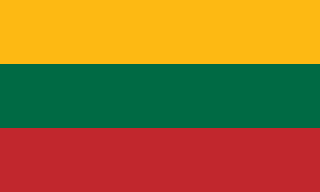
Welcome to Lithuania
Lithuania, officially the Republic of Lithuania, is a country in northeastern Europe along the Baltic Sea.
It borders Latvia, Belarus, Poland and Russia's Kaliningrad region.
Its capital, Vilnius, is known for its historic Old Town, churches, universities and cultural life.
Other important cities include Kaunas, Klaipėda, Šiauliai, Panevėžys, Alytus and Marijampolė.
Lithuania is celebrated for its independence movement, cultural traditions, castles, forests, lakes, amber and remarkable history.
But it must not be understood only through its landmarks or its struggles against occupation.
It is parents raising children, teachers encouraging students, farmers growing food, nurses caring for patients and grandparents preserving family memories.
It is also individuals facing poverty, loneliness, homelessness, illness, discrimination or the emotional consequences of historical suffering.
"To understand Lithuania, we must discover the humanity behind its flag."
🏡 A Day in the Life of Lithuania
Imagine an ordinary morning somewhere in Lithuania.
In Vilnius, a commuter travels to work through the streets of the capital.
In Kaunas, a university student prepares for another day of classes.
In Klaipėda, a port worker begins a shift beside the Baltic Sea.
In Šiauliai, a teacher welcomes students into a classroom.
In a rural village, a farmer tends fields or animals.
Near Trakai, a family enjoys the peaceful scenery beside a lake.
In a small town, a grandparent shares memories of Lithuania's restored independence.
A nurse begins a hospital shift. A parent prepares breakfast. A young adult searches for meaningful work.
Some households enjoy stable incomes, comfortable homes and close community relationships.
Others struggle with rising expenses, inadequate housing, loneliness or difficulties accessing healthcare.
🏛️ Lithuania's Ancient and Medieval Heritage
The lands of present-day Lithuania have been inhabited for thousands of years.
Early Baltic communities developed farming, trading, craftsmanship and religious traditions connected to the natural world.
The Grand Duchy of Lithuania
During the thirteenth century, Lithuania developed into a powerful medieval state.
Mindaugas was crowned king in 1253, an important event in Lithuania's early statehood.
Expansion and Cultural Exchange
Under rulers including Gediminas and Vytautas, the Grand Duchy grew into a major European power.
At its height, it encompassed lands inhabited by many different peoples, languages and religious communities.
Christianization
Lithuania's official conversion to Christianity began in the late fourteenth century, although earlier and later religious traditions continued to influence society.
The Polish-Lithuanian Commonwealth
In 1569, the Union of Lublin created the Polish-Lithuanian Commonwealth.
The commonwealth became an important political and cultural entity in European history.
Partitions and Imperial Rule
During the late eighteenth century, the commonwealth was partitioned by neighbouring powers.
Most Lithuanian territory came under Russian imperial rule.
"A nation's history is more than the story of kings and borders. It is the story of people who lived, loved and hoped through every generation."
🇱🇹 Lithuania's Independence - February 16, 1918
During the nineteenth century, Lithuanian communities worked to preserve their language, literature and national identity.
The Press Ban
From 1864 to 1904, Russian imperial authorities restricted Lithuanian-language publications using the Latin alphabet.
Book smugglers and educators helped preserve Lithuanian literacy and cultural traditions.
The First World War
The First World War brought military occupation, hardship and political change to the region.
February 16, 1918
The Council of Lithuania adopted the Act of Independence, declaring the restoration of an independent Lithuanian state.
Defending Independence
Following the declaration, Lithuania fought conflicts to secure its independence.
Soldiers and civilians faced danger, displacement and uncertainty.
Life Between the World Wars
Lithuania developed schools, institutions, cultural organizations and economic activities during the interwar period.
Its democratic development was interrupted by an authoritarian turn following the 1926 coup.
"Freedom begins with a belief that a people have the right to shape their own future."
🕯️ Lithuania During the Second World War
One of Lithuania's most painful historical periods began during the Second World War.
The Soviet Occupation of 1940
After the 1939 Nazi-Soviet Pact and subsequent changes in control, the Soviet Union occupied and annexed Lithuania in 1940.
Political institutions were dismantled, and many people experienced arrest, property confiscation or repression.
Nazi German Occupation
Nazi Germany invaded the Soviet Union in June 1941 and occupied Lithuania.
The occupation brought brutal persecution, forced labour and mass murder.
The Holocaust in Lithuania
Before the war, Lithuania was home to a vibrant Jewish population with important religious, cultural and intellectual traditions.
During the Holocaust, approximately 90 to 95 percent of Lithuania's Jewish population was murdered.
Nazi killing units and local collaborators participated in massacres and persecution.
Sites such as Paneriai, near Vilnius, became places of mass murder.
Remembering Jewish Life
Jewish communities had contributed deeply to Lithuania's cultural and social history.
Remembering the Holocaust also means remembering the families, schools, businesses and traditions destroyed.
Renewed Soviet Occupation
In 1944, Soviet forces returned to Lithuania, and Soviet control continued for decades.
Families experienced further repression, deportation and restrictions on political freedom.
"Every life lost to persecution represents a family, a history and a future that was taken away."
🕯️ Deportations and the Families Who Never Returned
During Soviet rule, large numbers of Lithuanian residents were forcibly deported to remote parts of the Soviet Union.
June 1941
Thousands of people were deported during mass operations shortly before Nazi Germany invaded the Soviet Union.
Families were separated and transported in harsh conditions.
Postwar Deportations
Additional large-scale deportations occurred after the war, especially in 1948 and 1949.
Farmers, children, older adults and other civilians were among those affected.
The Human Cost
People lost homes, land, possessions and connections to familiar communities.
Some died during transport or in exile, while others survived years of forced labour and hardship.
The Forest Brothers
Armed Lithuanian partisans, commonly known as the Forest Brothers, resisted Soviet rule after the Second World War.
The resistance involved dangerous fighting, harsh repression and serious consequences for families and communities.
Remembering Survivors
Survivors and descendants have preserved personal memories, photographs and testimony.
These stories help future generations understand the cost of political repression.
"No family should ever be forced from its home because a government fears who they are or what they believe."
🤝 The Baltic Way - A Human Chain for Freedom
On August 23, 1989, people across Lithuania, Latvia and Estonia participated in one of the most remarkable peaceful demonstrations in modern European history.
Joining Hands
Approximately two million people formed a human chain stretching about 600 kilometres across the three Baltic countries.
They called attention to the consequences of the Nazi-Soviet Pact signed fifty years earlier.
People from Every Walk of Life
Parents, children, grandparents, students, workers and community leaders stood together.
They represented different generations and experiences, but shared a desire for freedom.
A Peaceful Message
The Baltic Way demonstrated the power of civic solidarity without the use of weapons.
It formed part of a broader movement for restoring the independence of the Baltic states.
A Lesson for the World
It showed that people can express extraordinary courage through unity, determination and peaceful participation.
"One person reaches for another. One hand joins another. And together, humanity begins to change the world."
🕊️ March 11, 1990 and the Courage of January 1991
On March 11, 1990, Lithuania declared the restoration of its independence from the Soviet Union.
It was an extraordinary milestone in the struggle for self-government.
Resistance from Soviet Authorities
Soviet leaders opposed Lithuania's move toward independence and applied political, economic and military pressure.
January 13, 1991
Soviet forces attacked important locations in Vilnius, including the television tower and broadcasting facilities.
Large numbers of unarmed civilians gathered to defend their country's institutions and independence.
Fourteen people were killed and hundreds injured during the events.
Remembering the Victims
Those who died were individuals with families, hopes and futures.
Their lives are remembered as part of Lithuania's struggle for freedom.
International Recognition
In 1991, Lithuania's restored independence gained broad international recognition.
The country joined the United Nations that September.
"The memory of those who stood without weapons can inspire generations to defend human dignity through courage and unity."
🏛️ Democracy, Security and International Cooperation
Lithuania is a democratic parliamentary republic with a directly elected president.
Its national legislature, the Seimas, has 141 members.
Citizens participate through elections, civic organizations, public discussion and peaceful demonstrations.
Lithuania joined the European Union and NATO in 2004.
It adopted the euro in 2015.
Security and Defence
Russia's full-scale invasion of Ukraine in February 2022 heightened security concerns throughout the Baltic region.
Lithuania has supported Ukraine through humanitarian, diplomatic and security assistance.
Different Public Views
Political debates include defence, social services, education, healthcare, taxation and economic opportunity.
Lithuanians hold varied perspectives, and no political party represents every person's views.
Democratic institutions require rights, accountability and the freedom to disagree peacefully.
"Freedom is protected through democratic participation, human rights, responsible institutions and peaceful cooperation."
🌍 Lithuania's Languages and Communities
Lithuania has a distinctive national culture shaped by its language, history and diverse communities.
Lithuanian is the official language and one of the surviving Baltic languages.
Polish and Russian Communities
Polish-speaking and Russian-speaking communities form important parts of Lithuania's population.
Belarusian and Ukrainian Communities
Lithuania is also home to people with Belarusian and Ukrainian backgrounds, including those who have sought safety in recent years.
Jewish Heritage
Before the Holocaust, Vilnius was internationally known as a major centre of Jewish religious and intellectual life.
Preserving Jewish heritage and remembering the destruction of Jewish communities remain important responsibilities.
Lithuanian Tatars and Karaims
Tatar and Karaim communities have longstanding histories in Lithuania, including distinctive religious and cultural traditions.
Respecting Differences
People should not be judged solely by ethnicity, language, family history or political beliefs.
❤️ Family, Friendship and Community
Family and friendship connections are important to many Lithuanians.
Households include parents with children, grandparents, couples, single parents and people living alone.
Families gather for meals, birthdays, religious holidays and seasonal celebrations.
Grandparents may share stories about Soviet rule, restored independence and changes in everyday life.
Many Lithuanians have relatives living abroad, including in Britain, Ireland, Norway, Germany and Canada.
These international connections provide opportunities but sometimes lead to separation and loneliness.
Some families struggle with financial insecurity, caregiving responsibilities, illness or grief.
A strong community makes room for people who need friendship, support or a second chance.
"Belonging begins when someone knows their life, memories and feelings matter to others."
🎵 Lithuanian Culture and Traditions
🎶 Song Festivals
Lithuania's song and dance celebrations bring together choirs, dancers and audiences, preserving national cultural traditions.
🌿 Joninės
Midsummer festivities feature music, flowers, traditional customs and gatherings connected to the season.
🍲 Food
Cepelinai, šaltibarščiai, rye bread, potato dishes and regional foods reflect Lithuanian culinary traditions.
🧶 Amber and Crafts
Amber jewellery, linen weaving, wood carving, ceramics and folk arts are important cultural expressions.
📚 Literature
Lithuanian poetry, folk stories and literature preserve language, history and reflections on human life.
🏀 Basketball
Basketball is especially popular in Lithuania, alongside football, athletics, cycling and other sports.
🎓 Children, Education and Opportunity
Children throughout Lithuania attend schools, form friendships and develop dreams for the future.
The country has public and private schools, universities and vocational training institutions.
Students pursue science, music, technology, literature, history, arts and sports.
Some children participate in traditional dance, choirs and cultural celebrations.
Yet opportunities are not equal for every household.
Some children experience financial hardship, bullying, disability-related barriers or family difficulties.
Children in rural areas may face longer journeys to school or limited services.
Language differences and migration can also create adjustment challenges for some students.
Every child deserves safety, nutritious food, encouragement, friendship and meaningful learning opportunities.
"Every child deserves a future shaped by opportunity, dignity and hope rather than the hardships of earlier generations."
🕊️ Faith, Spirituality and Beliefs
Roman Catholic Christianity has played an important role in Lithuania's history and culture.
Eastern Orthodox, Lutheran and other Christian communities also contribute to religious life.
Jewish communities have longstanding historical roots, particularly in Vilnius and other towns.
Lithuanian Tatars maintain Muslim cultural and religious traditions.
Karaim communities preserve distinctive religious and cultural practices.
Some residents identify as non-religious or find spiritual meaning outside organized religion.
The Hill of Crosses
The Hill of Crosses near Šiauliai has become a powerful symbol of faith, remembrance and perseverance.
Thousands of crosses have been placed there over time.
During Soviet rule, authorities repeatedly removed crosses, but people continued to return and place new ones.
The site remains an important place of pilgrimage and reflection.
"Faith and quiet reflection can give people strength, but compassion is something we can offer regardless of belief."
🌲 Forests, Lakes, Rivers and the Baltic Coast
Lithuania is known for forests, lakes, wetlands, rivers and beautiful Baltic coastline.
Trakai
Trakai Island Castle stands on an island in Lake Galvė, surrounded by scenic landscapes.
The Curonian Spit
The Curonian Spit is a long, narrow peninsula of sand dunes, forests and coastal settlements shared by Lithuania and Russia's Kaliningrad region.
Aukštaitija National Park
This national park is known for forests, lakes, traditional villages and outdoor recreation.
Dzūkija National Park
Dzūkija contains pine forests, river valleys and communities with distinctive traditions.
The Nemunas River
The Nemunas is Lithuania's major river and has shaped agriculture, transport, communities and history.
Environmental Challenges
Climate change, flooding, biodiversity loss, pollution and land-use pressures affect ecosystems.
Protecting nature means preserving resources and opportunities for future generations.
"The beauty of nature reminds us that our shared world deserves care, protection and gratitude."
🛠️ Work, Healthcare and Everyday Needs
Lithuanians work in manufacturing, education, healthcare, logistics, information technology, agriculture, retail and other industries.
Vilnius and Kaunas are important economic and educational centres.
Klaipėda is a significant Baltic port city.
Economic opportunities vary between large cities, smaller towns and rural communities.
Lithuania has public and private healthcare services, although waiting times, affordability and access may differ.
Some older adults face challenges involving pensions, health expenses and isolation.
Some young adults struggle with housing costs or insecure employment.
Every person deserves meaningful work, safe housing, adequate nutrition, healthcare and a secure future.
🌧️ Challenges Facing Lithuania
Lithuania has experienced major economic and social changes since restoring independence, but some residents still face serious hardship.
Poverty and Financial Security
Lithuania's official statistics reported that 22.6% of residents were at risk of income poverty in 2025, representing approximately 653,000 people.
Poverty or Social Exclusion
Eurostat's broader measure showed 26.3% of Lithuania's population at risk of poverty or social exclusion in 2025. The two measures have different definitions.
Older Adults
Some seniors experience low incomes, loneliness, healthcare difficulties or challenges paying for everyday necessities.
Housing and Homelessness
Some individuals struggle with affordable housing, insecure accommodation or homelessness.
Mental Health
Anxiety, depression, grief, loneliness and trauma affect people of different ages and circumstances.
Regional Inequality
Income, employment and access to services vary between cities and rural communities. The 2025 income-poverty risk was especially elevated in rural areas.
🎖️ Honouring Lithuanian Soldiers, Veterans and Civilians
Lithuania's military history includes medieval statehood, the wars of independence, the Second World War, resistance to Soviet occupation and modern national defence.
The Wars of Independence
After declaring independence in 1918, Lithuanian forces fought to defend the newly restored state.
Military personnel and civilians experienced sacrifice, injury and loss.
World War II
Lithuanians were affected by Soviet and Nazi occupations and the fighting between those regimes.
Some people served in different military formations, sometimes under coercion or difficult circumstances.
Remembering individuals must never excuse atrocities or collaboration in the Holocaust.
Partisan Resistance
Lithuanian partisans fought against Soviet rule after the Second World War.
Many died, were imprisoned or saw their families suffer repression.
January 1991
Unarmed civilians defending independence were killed or injured during Soviet military actions in Vilnius.
They are remembered for their courage and commitment to freedom.
Modern National Defence
Lithuania maintains armed forces and participates in NATO collective defence.
Lithuanian personnel have also served in international operations, including in Afghanistan and other countries.
Veterans and Families
Veterans may experience physical injuries, emotional trauma, bereavement or challenges returning to civilian life.
Their families deserve appropriate care, recognition and support.
Remembering Civilians
Victims of the Holocaust, Soviet deportations, political repression and military violence must also remain central to remembrance.
"The greatest tribute to those who sacrificed is protecting the freedom, dignity and lives of future generations."
🤝 Lithuanians Helping One Another
Throughout Lithuania, charities, community groups, volunteers and public services support people experiencing hardship.
Some provide food, shelter, healthcare assistance and help for older adults.
Others support children, people with disabilities and individuals experiencing homelessness.
Community organizations assist refugees and families displaced by war.
Volunteers also support Ukraine through humanitarian and other authorized assistance.
Teachers, healthcare workers, friends and neighbours perform countless acts of kindness every day.
The traditions of peaceful civic action and community solidarity remain important parts of Lithuanian life.
"When we recognize another person's need, we have an opportunity to make compassion real."
🌅 Lithuania's Dreams for Tomorrow
Imagine a Lithuania where every child grows up in a safe and loving home.
Where families can afford housing, nutritious food, healthcare and winter heating.
Where older adults receive companionship, dignity and appropriate care.
Where those experiencing homelessness can find stable housing and practical support.
Where mental health difficulties are met with understanding and accessible treatment.
Where young people have opportunities to learn, work and build meaningful lives.
Where people of different languages, religions and cultural backgrounds are respected.
Where Jewish heritage and all victims of wartime persecution are remembered truthfully.
Where families who suffered Soviet deportations and political repression are honoured.
Where veterans receive the care and recognition they deserve.
Where forests, lakes, rivers and Baltic coastlines remain protected.
Where freedom and democratic institutions are sustained through peaceful civic participation.
Where the spirit of the Baltic Way inspires cooperation between people and nations.
And where every person can live with dignity, security, belonging and peace.
"A nation's greatest achievement is a future where every human life has the opportunity to flourish."
🌎 Your Journey of Understanding
You have explored Lithuania's history, language, independence, wartime suffering, peaceful resistance, culture and everyday challenges.
Now consider three reflections connecting your mind, heart and spirit. Click each question to reveal its reflection.
🧠 MENTALLY - What have you learned?
Before this journey, what came to mind when you thought of Lithuania?
Vilnius? Ancient castles? Forests? The Baltic Sea?
Did you also think about the Holocaust, Soviet deportations, the book smugglers who preserved the Lithuanian language, the Baltic Way and January 1991?
What does Lithuania's history teach us about the value of independence and human rights?
Why is it important to remember every victim of political violence, even when their suffering complicates a national story?
How can peaceful civic action shape the future of a country?
❤️ EMOTIONALLY - What touched your heart?
Imagine a Lithuanian child being deported far from home with their family.
A Jewish family in Vilnius facing persecution during the Holocaust.
A grandmother remembering someone who never returned from Soviet imprisonment.
A mother holding hands with her children during the Baltic Way.
An unarmed person standing near the Vilnius television tower in January 1991.
A veteran remembering a fallen friend.
A senior living alone and struggling with winter expenses.
Which story touches your heart most deeply?
How might compassion lead us toward meaningful action?
🕊️ SPIRITUALLY - What connects us?
Lithuania has endured occupation, deportations, war and the long struggle to restore independence.
What can its peaceful independence movement teach us about courage?
Can we honour soldiers while also recognizing the civilians harmed by war and oppressive governments?
How can truthful remembrance prevent hatred and discrimination from passing to future generations?
What does the Baltic Way teach us about the power of one person joining hands with another?
Does inner peace mean avoiding difficult truths, or learning to face them with honesty and compassion?
What small act of kindness could you offer today to remind someone that they matter?
The Lithuania Behind the Flag
Somewhere in Lithuania, a mother prepares breakfast for her children.
A teacher welcomes students into a classroom.
A farmer works beside green fields and forests.
A choir gathers to practise traditional songs.
A grandparent shares memories of the day Lithuania restored its independence.
A nurse comforts a patient.
A volunteer provides food to someone in need.
A veteran remembers a fallen friend.
A family preserves the memory of relatives lost through persecution or deportation.
A young person visits the Hill of Crosses and reflects on faith, remembrance and courage.
And somewhere, a child dreams of a world where people can stand together peacefully and know their voices matter.
"Ancient castles standing beside quiet lakes.
Forests holding generations of memories.
Hands joined across the Baltic lands.
Countless human stories.
One shared humanity."
That is the Lithuania behind the flag.
Return to Beginning Explore Another NationSources and Further Reading
Learn more about Lithuania's history, independence, remembrance, social conditions, culture and military service.
Lithuanian Ministry of Foreign Affairs - History of Lithuania
Lithuanian Ministry of Foreign Affairs - Restoration of Independence
Lithuanian Data Portal - Poverty Indicators, 2025
Eurostat - Poverty and Social Exclusion
Seimas - Parliament of Lithuania
Lithuanian Ministry of National Defence
Genocide and Resistance Research Centre of Lithuania
United States Holocaust Memorial Museum
UNESCO - Lithuania World Heritage
This page provides a broad, human-centred introduction and does not represent every Lithuanian person's experiences, beliefs or political opinions.